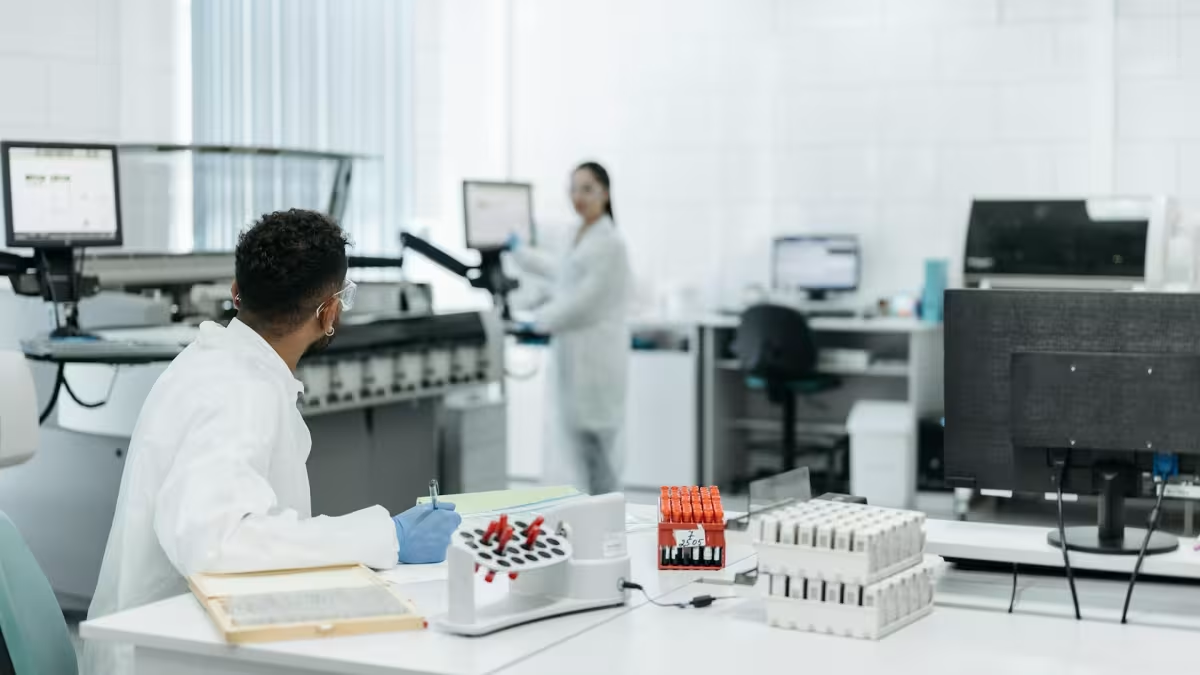
Health-conscious eaters track their calories, exercise regularly, and load their plates with what they believe are nutritious foods. But even vegetables and meats cooked the right way can harbor dangerous chemicals that most people never think about.
Polycyclic aromatic hydrocarbons, or PAHs, form when food is exposed to high heat, smoke, or flames. When fat and meat juices drip onto a hot grill or open fire, they create smoke that deposits these compounds directly onto the food. Scientists have linked PAHs to cancer in animal studies, though human evidence remains murky. That uncertainty is exactly why detecting and measuring these chemicals matters.
For decades, labs struggled to test for PAHs reliably. Traditional extraction methods were slow, labor intensive, and relied on harsh chemicals that posed risks to workers and the environment. Preparing a single sample could take hours and require multiple hazardous solvents.
A team at Seoul National University of Science and Technology found a faster way. Researchers led by Professor Joon-Goo Lee developed a streamlined testing method called QuEChERS, which stands for Quick, Easy, Cheap, Effective, Rugged, and Safe. In a 2025 study published in Food Science and Biotechnology, the team used the method to detect eight different PAHs across various foods.
The results were striking. Using acetonitrile to extract PAHs and then purifying samples through carefully selected sorbents, the researchers achieved detection limits as low as 0.006 micrograms per kilogram. The method showed recovery rates between 86% and 110%, meaning it reliably found the chemicals present without false negatives or false positives.
Among the foods tested, soybean oil contained the highest PAH levels, followed by duck meat and canola oil. Smoked and dried fish products also showed concerning concentrations. Grilled chicken feet emerged as a potential health concern based on European safety thresholds.
The breakthrough lies not just in accuracy but in speed. What once took hours can now be done faster, with less chemical waste and fewer hazards to laboratory workers. Food manufacturers could potentially use this method to screen products before they ship to supermarket shelves, catching contamination early.
Other researchers are building on the work. A separate 2025 study applied a modified version to 302 retail food samples, while another focused on cereals and cereal products from Romanian markets. These parallel efforts confirm that QuEChERS based approaches work across different food categories, from oils to meats to processed goods.
The variation in PAH levels across food types underscores why testing matters. The same beef can have wildly different chemical loads depending on how it is cooked, where it came from, and what was in the environment where it was processed or grilled.
Professor Lee sees the broader impact. Better detection methods support safer food production and reduce the chemical footprint of laboratory testing itself. As food safety agencies and manufacturers adopt faster, cleaner testing protocols, they gain the tools to understand where contamination happens and how to prevent it.
The challenge now is scaling up adoption. Not every food lab has access to the latest equipment or expertise. But as QuEChERS methods become more established and standardized, they could eventually become routine. That shift could mean fewer people exposed to hidden carcinogens in their everyday meals.
Author Jessica Williams: "This research matters because it finally gives regulators and food companies a practical way to catch a real hazard without the old headaches of slow, toxic testing methods."
Comments