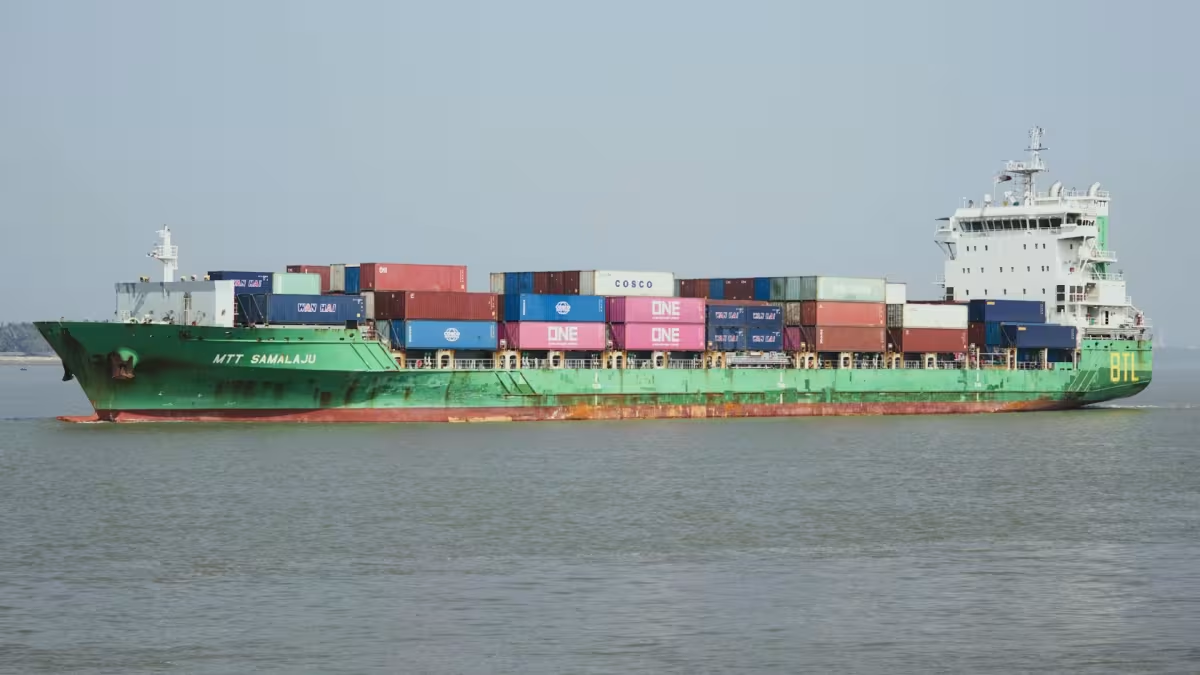
Global oil markets swung sharply lower at the start of the trading week as President Trump announced a breakthrough US-Iran peace deal that could restore flow through one of the world's most critical energy chokepoints. Brent crude plummeted 4% to below $84 a barrel, marking the lowest price since early March when the crisis began.
Trump declared on Sunday that the agreement was "now complete" and authorized what he called the opening of the Strait of Hormuz, telling the world to "let the oil flow." An hour later, he clarified that the strait would reopen after the deal is formally signed on Friday, with oil returning to both sides of the shipping channel for the region and global markets.
The price drop reflects cautious optimism that the blockade strangling Gulf oil exports could soon end. Since early March, the strait closure has effectively removed roughly 20 million barrels of oil per day from global supply, representing about one-fifth of the world's daily consumption. That disruption has been partly masked by a patchwork of emergency measures and demand destruction that have prevented prices from climbing even higher.
Yet significant questions linger about what comes next. The Iranian government has said a 60-day negotiating period will follow the signing to hammer out broader terms including Tehran's nuclear program and sanctions relief. Neither side has clearly specified the exact timing of the strait's reopening, who will manage safe passage, or what conditions might apply. Japan's Shipowners' Association reported Monday that 38 vessels with Japanese links remain stranded in the channel, and the organization urged patience pending firmer details about the deal.
The uneven path to avoiding an even deeper energy crisis has involved multiple workarounds. Gulf producers have rerouted about 5 million barrels daily through pipelines to alternative regional export hubs. Trump claimed that US military vessels have quietly moved another 2 million barrels per day through alternative routes using what he called "dark tankers" that operate largely undetected.
The International Energy Agency has also released record quantities of emergency crude and fuel at roughly 2.5 million barrels per day. Meanwhile, demand has contracted sharply as Asia cut back on imports and refineries slowed operations to manage through the shortage. China reduced its imports by about 4 million barrels daily, drawing instead on its record-high inventory levels and halting the aggressive stockpiling that had characterized recent years. Global demand may have fallen between 3 and 4 million barrels per day overall.
Analysts caution that a reopening would not instantly resolve the crisis. Tony Sycamore, an analyst at IG, noted Monday that negotiations around nuclear issues remain complex and that it is "hard to see crude falling much further from here in the near term." Once the strait does reopen, countries will likely use the opportunity to rebuild depleted strategic reserves and replenish stockpiles, potentially creating new demand pressures.
The broader impact of the crisis could extend well beyond the summer months. Rystad Energy estimates that the blockade has already taken roughly 1 billion barrels of oil out of the market. Even a swift reopening may not fully reverse the damage until early next year, analysts warn, particularly as northern hemisphere summer demand typically rises and global inventories sink to concerning levels.
Author James Rodriguez: "Trump is selling a done deal, but the fine print on reopening that strait remains dangerously vague, and oil traders are right to take the victory lap with a grain of salt."
Comments