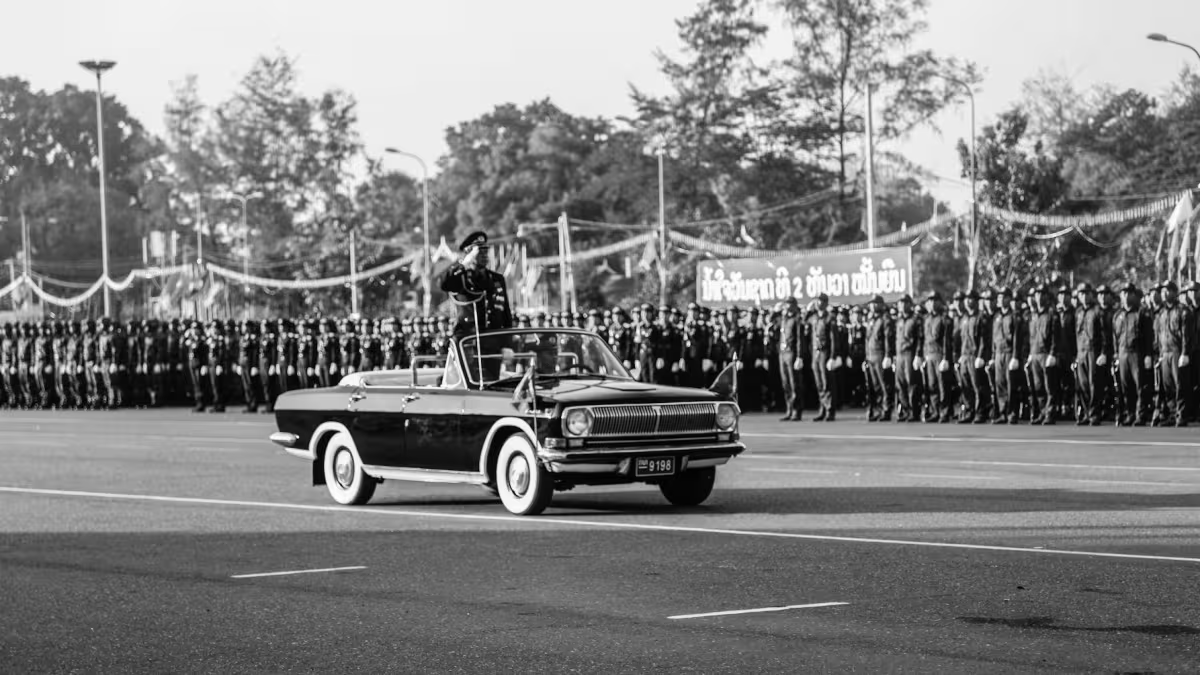
The Trump administration escalated its confrontation with Havana on Wednesday by securing a federal indictment against Raúl Castro, Cuba's 94-year-old former president, on charges including conspiracy to kill US nationals, four counts of murder, and destruction of aircraft.
The charges stem from a 1996 incident in which Cuban military forces shot down a civilian aircraft piloted by exiles over the Florida Straits, killing four men on a humanitarian mission. Castro, who served as the island's defense minister at the time, allegedly authorized the order to fire on the plane.
Five additional defendants were also indicted in connection with the incident in Miami federal court. The move marks an unusually aggressive prosecutorial step against a foreign leader and reflects the administration's stated goal of dismantling Cuba's communist government.
Trump told reporters the indictment would not trigger military escalation. "I don't think there needs to be," he said, adding that Cuba "is falling apart" and has "lost control."
Yet the president's rhetoric painted a starkly different picture. During a commencement speech at the US Coast Guard Academy, Trump referenced the "shores of Havana" alongside the Panama Canal and the Arctic, suggesting US intent to project military dominance across multiple strategic regions.
"From the Gulf of America to the frozen waters of the Arctic, from the shores of Havana to the banks of the Panama canal, we will drive out the forces of lawlessness and crime and foreign encroachment, just like we've been doing," Trump said.
The timing underscores escalating US-Cuba tensions. Trump has previously threatened military action against the communist regime, which currently faces severe economic pressure from the decades-old US oil embargo. Rolling blackouts and acute fuel shortages have sparked civil unrest in Havana and other cities.
The indictment and Trump's military rhetoric coincide with heightened pressure on multiple geopolitical fronts. A US special envoy visiting Greenland declared it was time for Washington to "put its footprint back" on the Arctic island, reinforcing Trump's repeated claims that American control of the Danish territory is essential to national security. The president has argued that without US possession, Greenland risks falling under Chinese or Russian influence.
Meanwhile, federal agents conducting raids on the homes of immigration activists in Southern California have drawn complaints of intimidation tactics from an ICE-watch group that organizes neighborhood patrols. The administration's immigration enforcement agenda continues to expand on multiple fronts.
Other developments on Wednesday included a $300 million commitment from George Soros' Open Society Foundations to bolster economic security and civil liberties across the United States. In labor relations, a new report from the Economic Policy Institute revealed that US employers spend more than 1.5 billion dollars annually on union opposition efforts.
Tennessee authorities agreed to pay $835,000 to settle a lawsuit brought by a man imprisoned for over a month due to a Facebook post concerning the assassination of conservative activist Charlie Kirk, signaling potential liability for states pursuing aggressive social media policing.
Internationally, an American physician infected with Ebola in the Democratic Republic of the Congo was evacuated to Germany for treatment along with his wife and four children as the World Health Organization warned of the outbreak's accelerating scope.
Author James Rodriguez: "Trump is betting he can talk tough on Cuba without firing a shot, but the militaristic language about Havana and control of strategic territories suggests the opposite calculation."
Comments