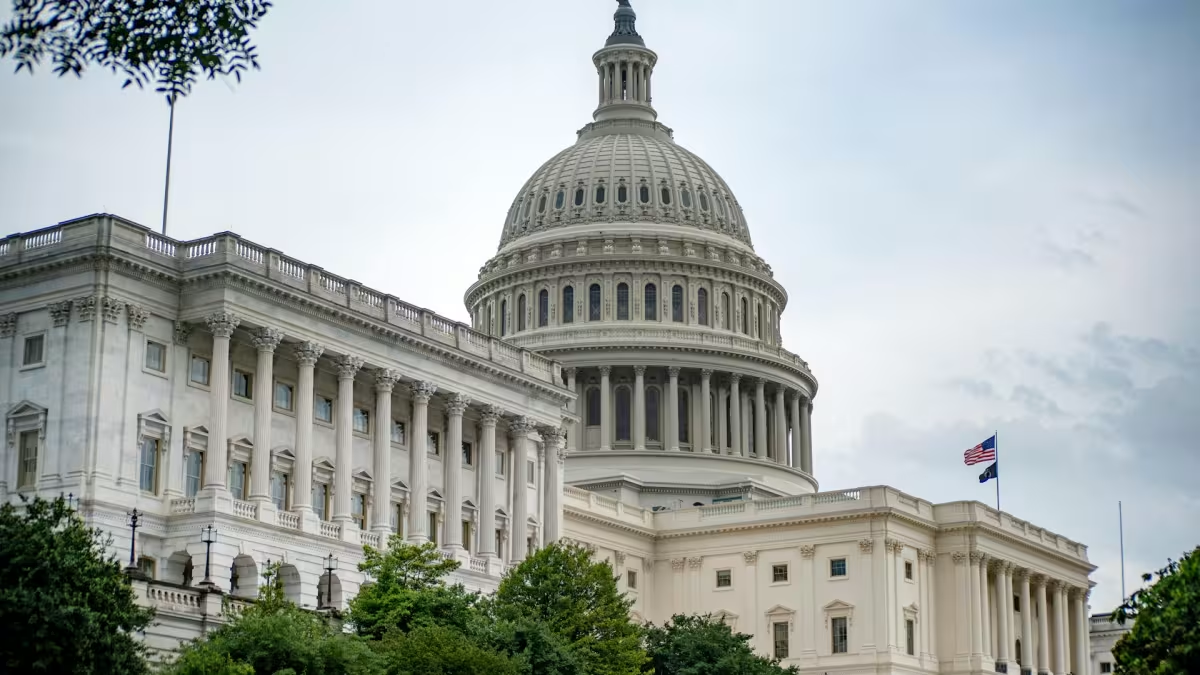
The White House is asserting that active military conflict with Iran has ceased, a legal argument designed to sidestep a congressional deadline on war powers that falls today. The move allows the administration to avoid triggering the 60-day War Powers Resolution clock that would ordinarily require either congressional approval or a formal request for an additional 30-day extension.
In a letter to Congress, the White House declared that "hostilities that began on February 28, 2026, have terminated." Yet the U.S. maintains an ongoing naval blockade of Iran's ports, muddying the administration's claim that fighting has stopped. Defense Secretary Pete Hegseth advanced similar logic during a Senate hearing, arguing that the ceasefire between Washington and Tehran effectively pauses the legal countdown.
House Speaker Mike Johnson, R-La., declined to engage with questions about the deadline itself, asserting instead that "we are not at war" and expressing reluctance to challenge the administration while "sensitive negotiations" are underway. That unified Republican stance cracked slightly this week when Sen. Susan Collins, R-Maine, voted alongside Democrats on a failed measure to halt military operations pending congressional approval. Collins, facing a competitive reelection campaign, was the sole Republican to break ranks.
Meanwhile, the geopolitical picture remains volatile. Trump has been briefed on potential options regarding the Strait of Hormuz, and Iran is reportedly preparing munitions for a possible resumption of hostilities. When asked about military options, Trump posed the choice bluntly to reporters: "Do we want to go and just blast the hell out of 'em and finish them forever, or do we want to try and make a deal?"
The conflict has already left marks on the domestic political landscape. Gas prices hit a new wartime high of $4.39 per gallon nationally today. Public support for the war continues to erode, with a new Washington Post/ABC News/Ipsos poll showing 61% of adults view the conflict as a mistake, compared to 36% who support it. That gap mirrors recent NBC News polling reflecting widespread public dissatisfaction with the war effort.
The political calculation around Iran will likely shape the midterm environment heading into this fall, as both parties grapple with voter sentiment and the administration weighs its next steps in a standoff that remains fundamentally unresolved.
Author Sarah Mitchell: "The White House's legal sleight of hand on the War Powers clock is thin cover for a conflict that refuses to end, and Republicans' unwillingness to challenge it on principle suggests they're hoping voters simply move on."
Comments