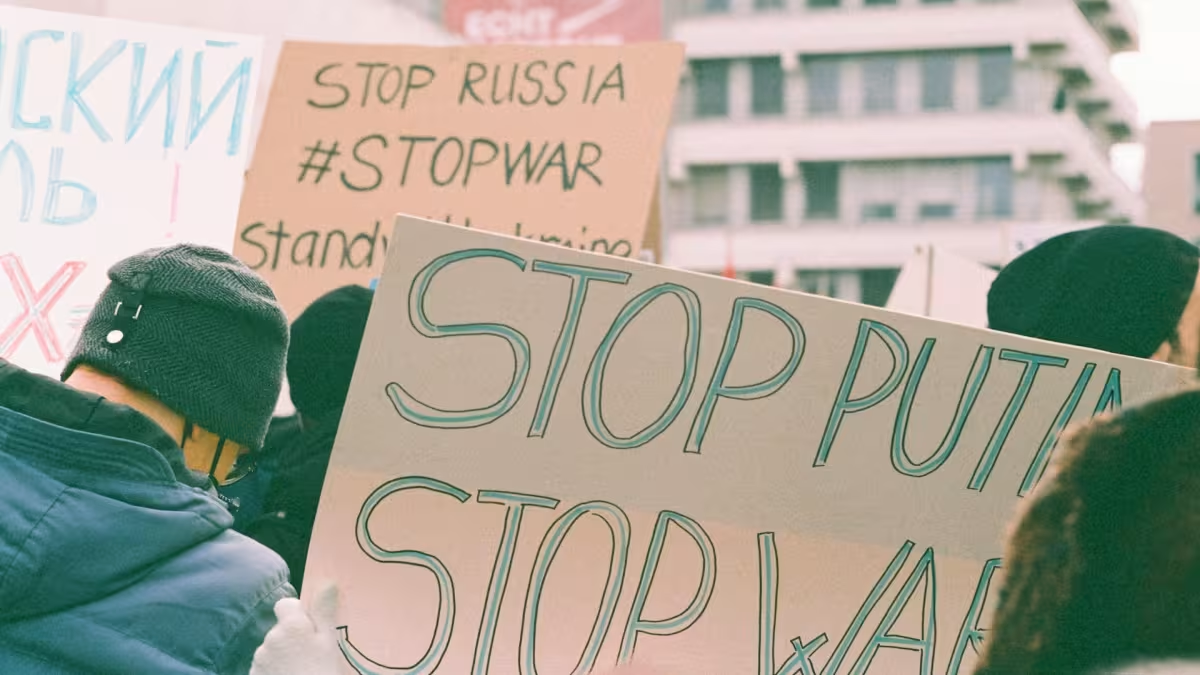
Thousands of demonstrators poured into streets across major American cities on Friday to mark May Day with protests spanning a broad range of grievances: opposition to the Trump administration, the Iran war, immigration enforcement, and social injustice.
Large rallies materialized in Washington DC, New York, Los Angeles, Chicago, and San Francisco. In the nation's capital, crowds gathered on the National Mall as Marine One departed the White House carrying President Trump. A giant placard displaying the preamble to the United States Constitution was displayed during the march and rally in DC.
The demonstrations drew action at symbolic locations. In Manhattan, police detained a demonstrator for blocking the entrance to the New York Stock Exchange as the labor-focused protests unfolded. At San Francisco International Airport, activists organized a May Day and ICE Out of San Francisco protest at the international terminal, drawing workers and advocates targeting immigration enforcement.
Union workers joined the broader movement. Local 11 members picketing outside the FIFA Los Angeles World Cup 2026 host committee headquarters demonstrated labor solidarity with the day's themes, connecting workplace demands to the larger coalition mobilizing across the country.
Immigration issues surfaced as a central concern. Jennifer Vasquez Sura, whose husband was wrongfully deported to El Salvador, and Mildred Danis-Taylor, whose husband is detained at ICE's Stewart Detention Center, were both present at the Washington DC rally, exemplifying the personal stakes driving participation.
Chicago saw sustained protest action, with demonstrations filling Union Park and surrounding areas. In Los Angeles, marchers proceeded to city hall while other groups gathered in MacArthur Park, reflecting the scale and decentralized nature of Friday's mobilization.
The breadth of issues raised across venues underscored how May Day 2026 functioned as a convergence point for disparate activist movements. Labor concerns, anti-war sentiment, immigration reform demands, and critiques of the current administration all found expression within the same protest infrastructure, even as each city's march maintained its own character and focal points.
Author James Rodriguez: "These turnouts show May Day remains a potent organizing occasion when movements can build scale without sacrificing specificity on what drives each crowd into the streets."
Comments