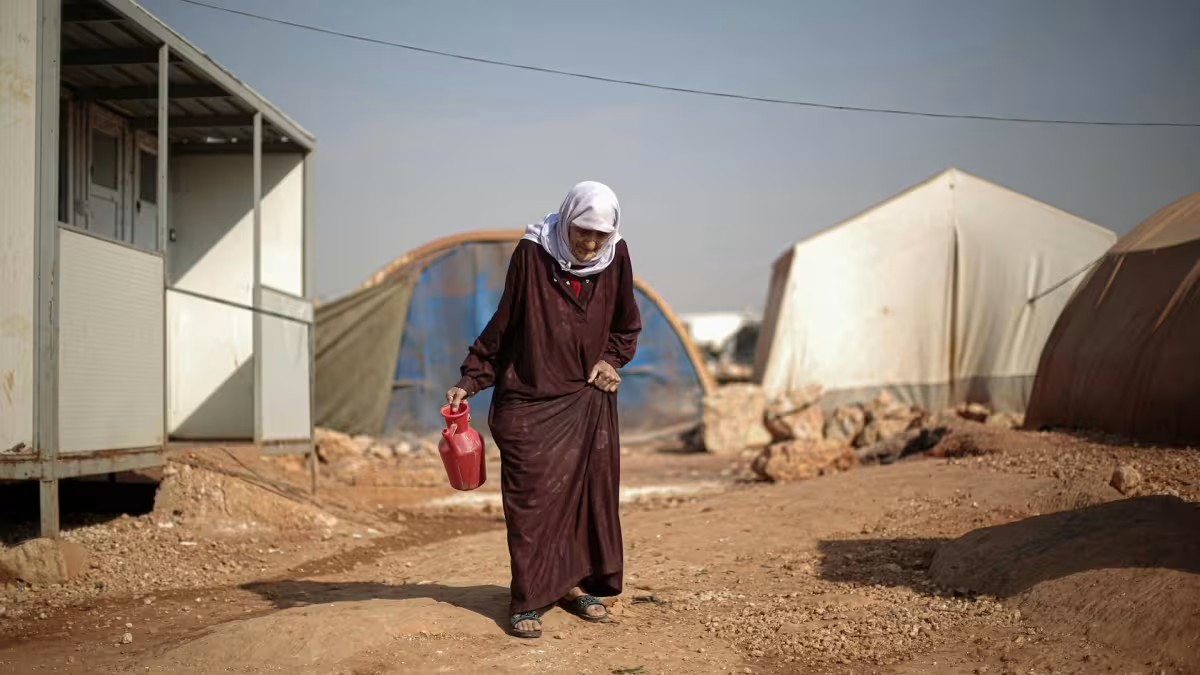
The Trump administration moved Monday to revive a stricter standard for green card applicants, one that could penalize immigrants for using Medicaid, CHIP, and other public assistance programs. The Department of Homeland Security formally unveiled the revamped "public charge" policy, a framework that was originally expanded during Trump's first term, rolled back under Biden, and now returns with expanded teeth.
Under the new rule, immigration officers gain broader discretion to review whether applicants have used means-tested benefits like Medicaid, CHIP, and food assistance when weighing their eligibility for permanent residency. The policy emphasizes that immigrants should be self-reliant and that government support should not drive immigration decisions.
The shift represents a fundamental retreat from Biden-era restrictions that had narrowed public charge determinations to cash welfare benefits only. Now, the full range of health and nutrition programs can factor into an officer's assessment on a case-by-case basis.
Public health advocates warn the change will trigger a widespread retreat from health coverage among immigrant families, even those legally entitled to benefits. The fear alone may prove enough to keep people away from clinics and hospitals they desperately need.
"This rule will exacerbate the pervasive fear and uncertainty among immigrant families," Andrew Racine, president of the American Academy of Pediatrics, said in a statement. He cautioned that children, including U.S. citizens with immigrant parents, could lose access to vital health services they qualify for.
A KFF-New York Times survey documented the pattern already emerging. Last year, 11% of immigrant adults stopped using public benefits due to immigration concerns. Among undocumented immigrants, the figure climbed to 42%, and nearly 17% of parents made the same choice. The Urban Institute found that roughly 25% of people in mixed-status families avoided benefits in 2022 because of green card worries, despite clarity that doing so was not required.
The ripple effects could strain the healthcare system itself. Public health experts predict increased emergency room visits as people avoid preventive care, rising costs for uncompensated care at hospitals, and widening health disparities across vulnerable populations. DHS estimated the government could save more than $13 billion annually through reduced transfer payments, but acknowledged that hospitals and health providers relying on Medicaid reimbursements would see revenue decline, as would pharmaceutical and medical supply companies.
The policy takes effect September 18 for new green card applications. Certain groups, including refugees and asylum-seekers, remain exempt from public charge determinations, a carve-out from longstanding federal policy designed to screen out those deemed likely to become dependent on government support.
The new framework represents a pendulum swing in immigration policy that turns health access into a liability. Experts predict the chilling effect will be immediate and severe, discouraging immigrant families from seeking the care they need and are legally eligible to receive.
Author James Rodriguez: "The administration is essentially weaponizing healthcare against immigrants, and the collateral damage to public health infrastructure and vulnerable children will be substantial."
Comments