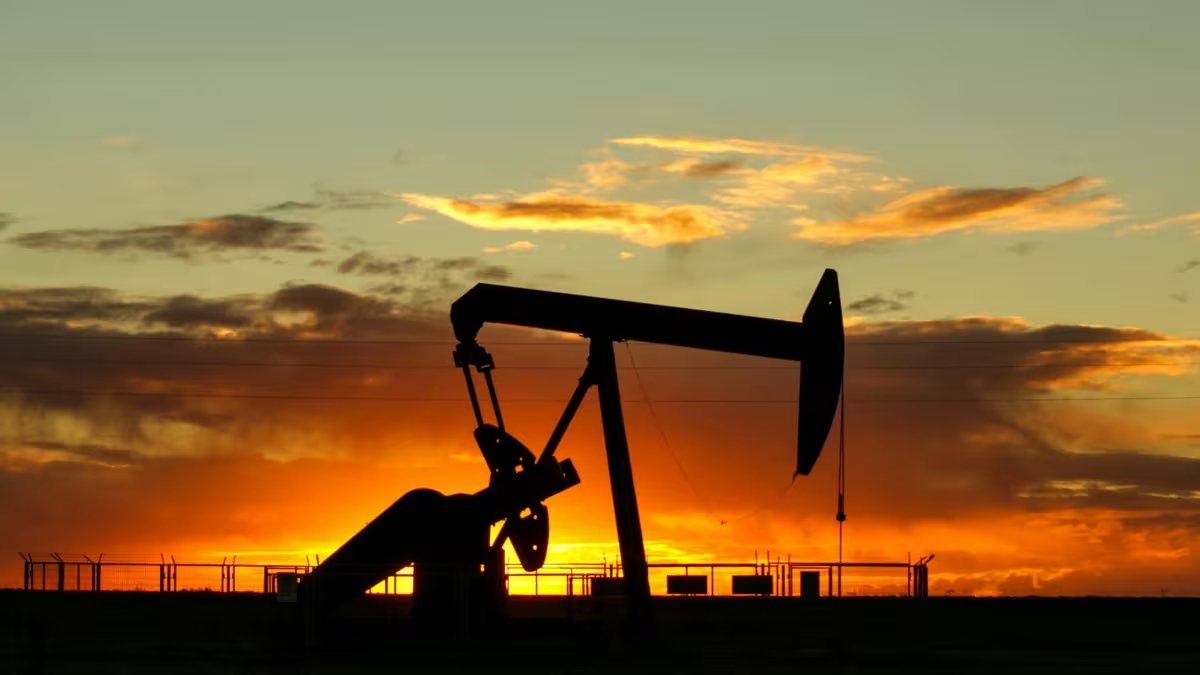
Inflation cooled to 3.5% in June as a temporary ceasefire between the US and Iran temporarily eased energy costs, but the respite proved fleeting. A ceasefire that had dampened oil prices has since collapsed, sending fuel back up and threatening to reignite price pressures across the economy.
The consumer price index, which tracks price movements in a broad basket of goods and services, fell 0.8% month-over-month in June, marking the largest one-month decline since April 2020. Energy prices drove the improvement, with gasoline dropping 9.7% and fuel oil declining 9.2% in a single month. Yet that temporary relief now looks like a false bottom as geopolitical tensions resurface.
The brief ceasefire had been crucial to bringing CPI down from May's three-year high of 4.2%. Energy prices have been the stubborn driver of inflation throughout the conflict, which began earlier this year and pushed CPI well above the Federal Reserve's 2% target. After staying mostly below 3% in the months prior, the index jumped sharply, reaching 4.2% by May before the June truce brought modest relief.
When stripping out volatile energy and food costs, core inflation edged down to 2.6% on an annual basis and remained flat month-over-month, suggesting underlying price pressures have stabilized somewhat. But broad categories like shelter, utilities, and food all moved higher even as energy declined, signaling that inflation remains broad-based across the economy.
The recent escalation between the US and Iran has already reversed those gains. Brent crude oil, the global benchmark, climbed to $80 per barrel on Monday after hitting a low of $67 earlier in July. At the pump, the national average for a regular gallon of gas has jumped to $3.87, up 70 cents from a year ago.
That jump in fuel costs is already rippling outward. Delta Air Lines disclosed in its latest quarterly earnings that it expects elevated airfares to persist and has passed along 60% of its additional fuel expenses directly to consumers. Higher energy costs have historically cascaded into higher prices for shipping, manufacturing, and travel, making any sustained oil spike a concern for policymakers fighting to bring inflation back down.
The labor market has remained relatively resilient despite the economic turbulence. From April through June, employers added an average of 111,000 jobs per month, suggesting steady demand and wage pressure even as prices have climbed.
Polling data reveals widespread anxiety among Americans about the economic trajectory. A Harris-Guardian survey found that a majority of respondents believe the economy is deteriorating compared with February, and 95% say the country faces an affordability crisis. Despite these concerns, Donald Trump said last month that he is not worried about the inflation figures.
Trump also weighed in on the oil standoff, asserting on Monday that the Strait of Hormuz, through which roughly a fifth of global oil and gas passes, will remain open with or without Iran's cooperation. The administration has threatened to reinstate a blockade of Iranian ports, a move that could further disrupt global energy markets.
The Federal Reserve will tackle these competing pressures at its scheduled board meeting on July 28 and 29. Last month, the central bank unanimously voted to hold rates steady and reaffirmed its commitment to price stability. With inflation still significantly above its 2% goal, policymakers face a tricky balancing act between supporting the job market and bringing down prices.
Kevin Warsh, the newly installed Fed chair, testified before the House Financial Services Committee on Tuesday and pledged that the central bank will defeat the inflation surge that has persisted over the past five years. He said the Fed is taking a "fresh look" at its current practices to ensure it is meeting its core objectives.
Warsh defined price stability as a state in which households and businesses no longer have to worry about or think about price changes. He did not outline specific rate-setting moves but emphasized the Fed's determination to achieve that goal.
The Fed chair also acknowledged artificial intelligence as potentially the most significant economic transformation of his lifetime. While the central bank cannot predict AI's full consequences, Warsh expressed confidence that the US will prevail in developing the technology. He suggested that productivity gains from AI could ultimately boost wages and economic strength, though he cautioned that such improvements may take considerable time to materialize and warrant careful quarterly monitoring.
Author James Rodriguez: "The brief ceasefire gave us a peek at what lower inflation could look like, but geopolitics just snatched that hope away, and the Fed is stuck managing the fallout."
Comments