Donald Trump's assault on American democracy is running into a brick wall. From courtrooms to newsrooms, from university campuses to city streets, the nation's institutional safeguards are proving far more resilient than doomsayers predicted.
The threat is real. Trump is executing a textbook autocrat's strategy, methodically dismantling restraints on executive power. Yet across nearly every sector of American life, organized resistance is holding the line. The contest is tight, but momentum is shifting against him.
Congress has been the weakest link. Republicans, terrified of primary challenges, have largely capitulated to Trump's agenda. They rubber-stamped tax cuts for the wealthy while gutting healthcare for working Americans. Only recently have they found their spine, blocking his ballroom slush fund and voter suppression schemes. Their capitulation has been embarrassing and dangerous, but it was never total.
The courts tell a more complicated story. Over 300 lawsuits have challenged Trump administration actions, with many achieving at least temporary victories. The Supreme Court, presumed to favor Trump 6-3, has handed him significant wins on campaign finance and immigration. But even this conservative majority rejected his attempts to impose tariffs, restrict mail-in voting, remove Federal Reserve officials, and end birthright citizenship. The justices are not Trump's loyal servants, however much he expected them to be.
The media landscape reveals deeper cracks in Trump's control. Corporate owners nervous about his regulatory power have bent. CBS News installed an editor-friendly to the administration, triggering a mass exodus from 60 Minutes. Jeff Bezos, worried about antagonizing Trump over business interests, fired much of the Washington Post's international staff and saw key columnists and its cartoonist depart over perceived interference.
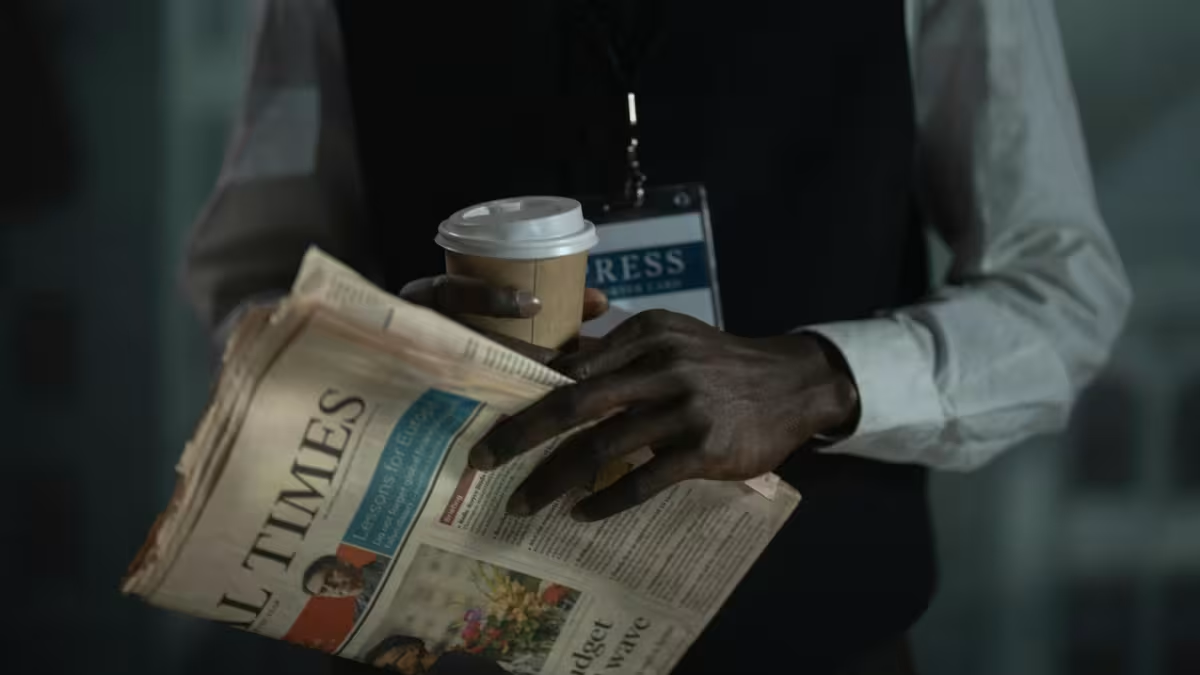
Yet independent journalism has not collapsed. Outlets with insulated ownership structures, like the New York Times under the Sulzbergers and the Guardian as a nonprofit, continue publishing aggressive investigations. Social media platforms, including Elon Musk's X, remain open sewers of Trump criticism. Podcasts proliferate. The Fourth Estate is damaged but not defeated.
Universities mounted surprising resistance. Trump withheld science and medical research grants to coerce compliance. Most schools refused to take the bait. Harvard sued the administration. Columbia was the notable exception, cutting a troubling deal. The broader academic community stood firm, rejecting Trump's offer of preferential funding in exchange for surrendering independence.
Law firms initially buckled, signing agreements after Trump threatened to bar them from government contracts. Public humiliation over their pro bono capitulation forced reckonings. Other firms fought back and won, and reportedly attracted clients who preferred lawyers with backbones. The legal profession fractured but did not surrender.
Civil society organizations have taken heavy fire. Trump levied fabricated criminal charges against the Southern Poverty Law Center. Groups dependent on government funding are self-censoring. Yet the ACLU leads courtroom battles. Human Rights Watch criticizes foreign policy. The noise from all directions remains deafening.
The streets have erupted. "No Kings" protests demonstrated the breadth of public opposition to Trump's monarchical ambitions. Mass demonstrations against deportation raids kept pressure on the administration. When federal agents killed two protesters in Minneapolis, public outrage forced the White House to scale back visible aggression.
Elections remain the ultimate check. Trump appears more interested in rigging them through gerrymandering and voter suppression than canceling them outright. Midterm projections suggest Republicans face a historic drubbing as Americans reject a government serving presidential vendettas over their needs.
America has weathered severe challenges before. Jim Crow fell. The McCarthy era ended. The nation survived its founding contradictions and its post-9/11 excesses. This moment differs in intensity but not in kind. The system is straining but holding.
Passive survival is not enough. Democracy requires active defense of its core tenets: rule of law over lawlessness, national community over divisiveness, respect for human dignity over tools for the aggrandizement of power. These principles remain vibrant. They must be fought for now, or they will not survive.
Author James Rodriguez: "Trump's playbook is failing because enough Americans and institutions still believe democracy is worth the fight."
Comments