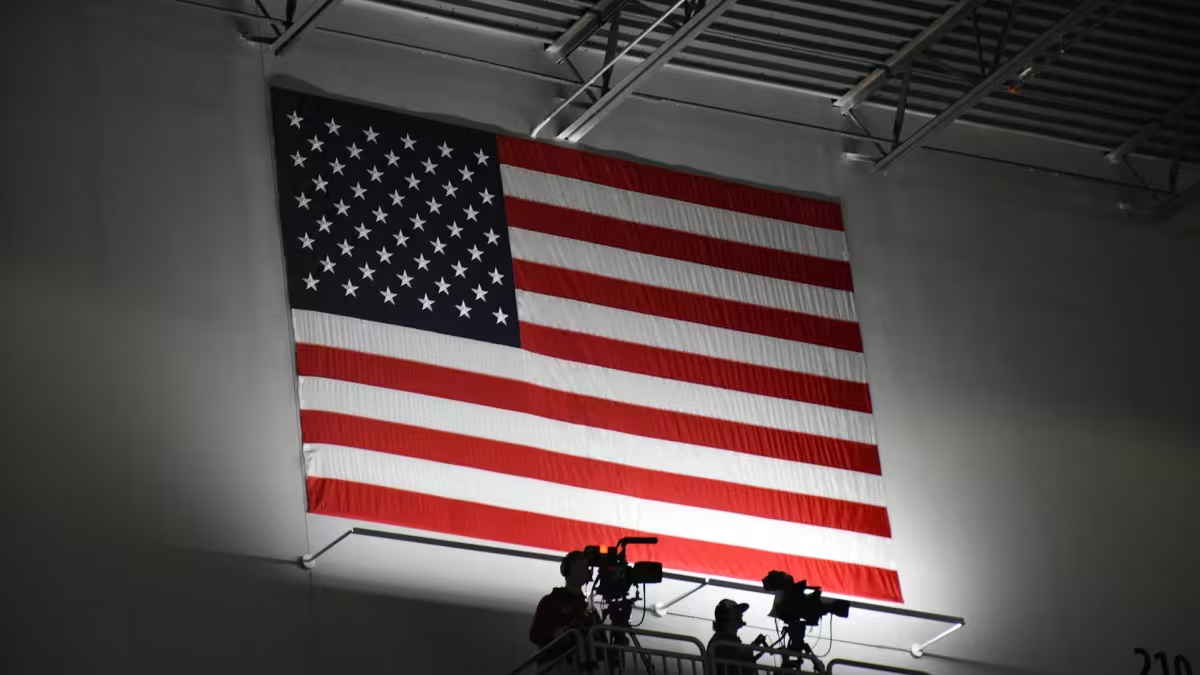
Donald Trump used America's 250th anniversary celebration to honor military service members while simultaneously advancing his political priorities, delivering remarks that mixed patriotic themes with attacks on communism and promotion of his legislative agenda.
Speaking at the Salute to America 250 event in Washington, D.C., Trump praised those who served in the armed forces. But he also used the platform to warn against communism, declaring "We don't want Communists in our country," and to tout the SAVE America Act, his policy proposal.
The speech reflected a broader tension at the anniversary celebration. While some national leaders attempted to frame the moment as one of shared patriotism above partisan division, Trump's remarks injected explicit ideological messaging into what organizers had framed as a unifying national occasion.
The event itself faced logistical challenges. Severe weather forced crowds to shelter on the National Mall, delaying proceedings. Trump acknowledged those who remained, thanking attendees for staying despite the weather disruptions. The heat wave that swept through Washington forced officials to alter some July Fourth festivities across the region.
Other figures took different approaches to the milestone. Former Presidents Clinton, Bush, Obama, and Biden each delivered messages for America at 250, while Vice President JD Vance appeared aboard the USS Kearsarge. Some governors, including Wes Moore, stressed their responsibility to demonstrate that "patriotism is not political," signaling concern about the partisan tone of some remarks.
Trump's focus on communism as a central theme of his remarks stood out among the various addresses. He emphasized that "Americans did not bow before a king," drawing a contrast to the nation's founding principles, though critics noted the shift from unity messaging to more pointed political rhetoric as the evening progressed.
The celebration underscored a persistent challenge for major national events: balancing commemoration of shared history with the political divisions that characterize modern America. Trump's decision to prominently feature policy advocacy and ideological warnings alongside military tributes illustrated how even ceremonial occasions have become venues for partisan messaging.
Author Sarah Mitchell: "Trump treated the nation's birthday like a campaign rally, and it raises real questions about whether major patriotic moments can still belong to all Americans or if they're just another stage for political combat."
Comments