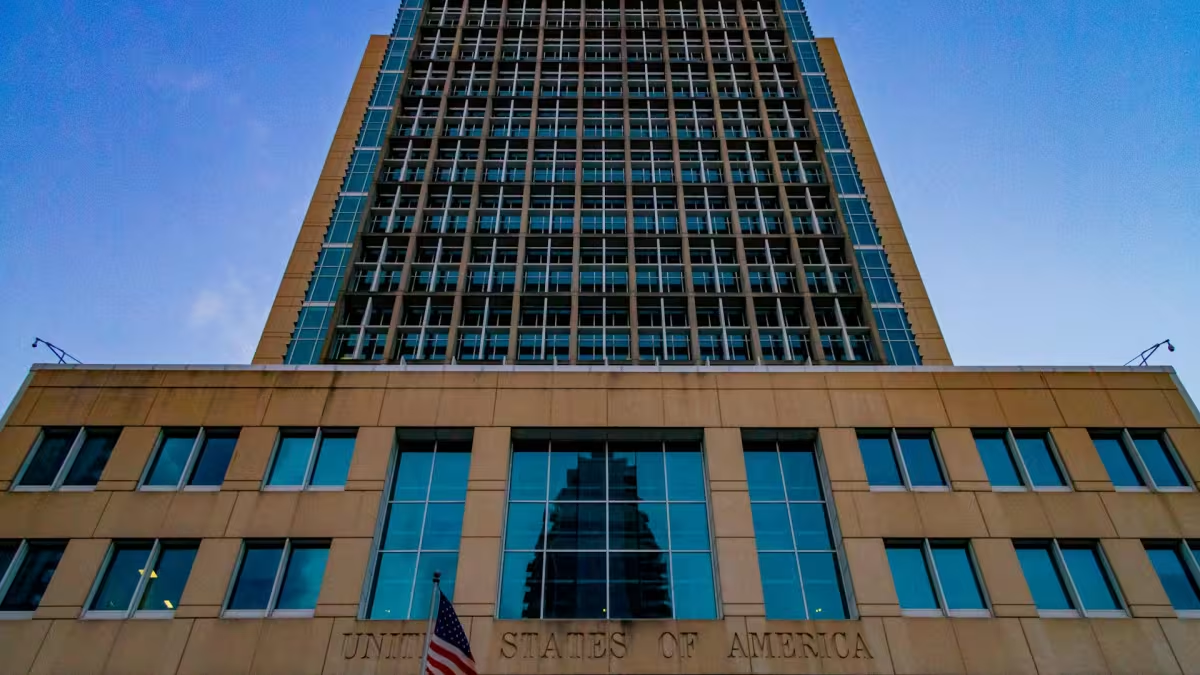
Two of the world's most enduring security partnerships stand at a pivotal moment, grappling with the fallout from the Trump presidency and the uncertainty of what comes next.
NATO's unity, built on decades of collective defense doctrine, has frayed under pressure to reshape burden-sharing arrangements and redefine the alliance's mission in an increasingly volatile Europe. The organization now confronts fundamental questions about its structure and relevance as member states debate military spending requirements and the nature of extended deterrence commitments.
Israel, meanwhile, navigates a complex relationship with American support that has historically anchored its regional strategy. Shifting political winds in Washington have created unpredictability in areas ranging from military aid to diplomatic backing, forcing recalibration of how the country approaches both immediate security threats and longer-term strategic positioning.
Reform efforts in both quarters appear inevitable. NATO officials recognize that institutional adjustments may be necessary to restore confidence among members and clarify mutual obligations. Similarly, Israeli strategists are reassessing alliance dependencies and exploring how to strengthen their security posture amid changing geopolitical circumstances.
The challenge for both organizations lies in managing institutional renewal without fracturing existing commitments. Each faces pressure to demonstrate relevance to contemporary threats while restoring cohesion damaged by recent political turbulence. How they navigate this transition will shape regional security dynamics for years ahead.
Author James Rodriguez: "These aren't theoretical debates anymore, they're survival questions for institutions that can't afford to get restructuring wrong."
Comments