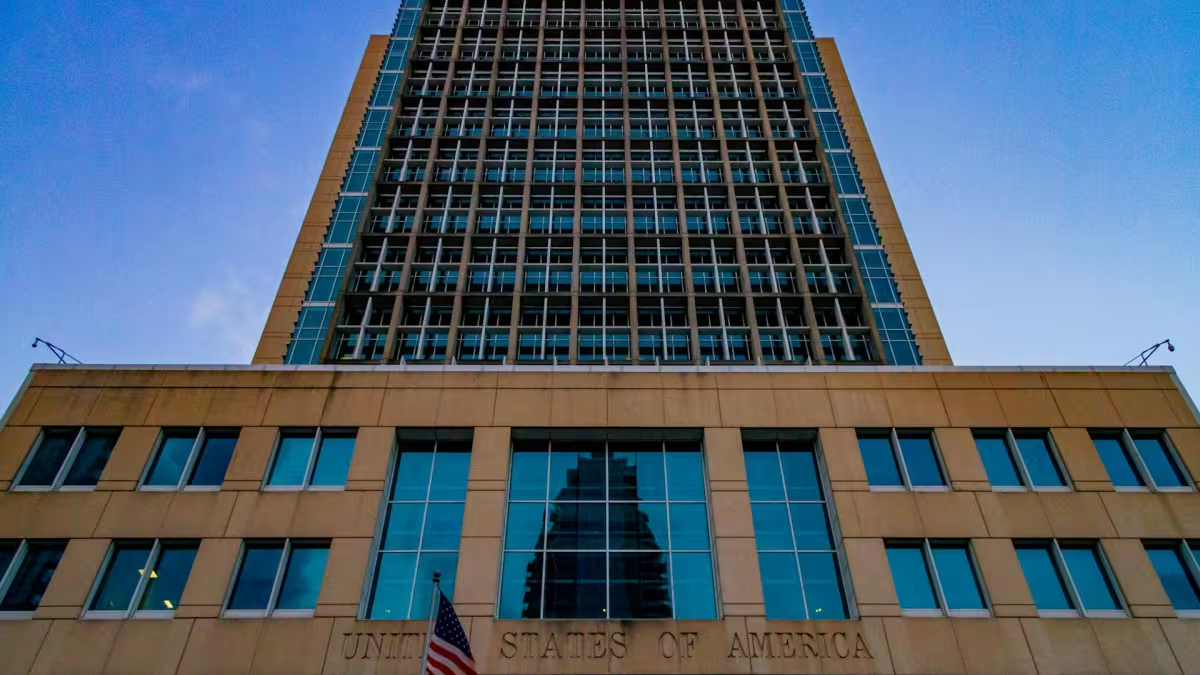
The Trump administration faces a familiar dilemma: whether to commit military resources to Iran policy or step back from deeper involvement in the Middle East. The tension mirrors decades of American strategic uncertainty over the region, with officials caught between hawkish pressure for action and the political cost of another prolonged conflict.
At the heart of the debate is whether current policy reflects genuine strategic caution or something closer to decision paralysis. Advisors worry that any aggressive move could trigger an escalation spiral, recalling the long occupations that damaged American credibility and treasure. Yet restraint carries its own risks, leaving Iranian moves unchallenged and raising questions about American resolve.
The specter of past interventions looms large over White House deliberations. Officials frequently reference the complications that followed earlier military commitments, fearing that repeating those mistakes would compound existing credibility gaps. This historical awareness shapes choices but may also constrain them, creating a situation where fear of repeating old errors prevents coherent action altogether.
The challenge is acute because Iran policy lacks simple solutions. Diplomatic openings stall. Sanctions pressure builds slowly. Military options carry steep risks. The result is a holding pattern that satisfies no one: not allies who want stronger commitment, not critics who demand clarity, and not policymakers seeking a clean path forward.
Whether the administration's approach constitutes prudent restraint or strategic confusion remains contested. What is clear is that without breaking the cycle of competing fears, Iran policy will continue to drift between insufficient pressure and unmanageable escalation.
Author James Rodriguez: "The real problem isn't choosing between military action and diplomacy, it's refusing to commit fully to either."
Comments