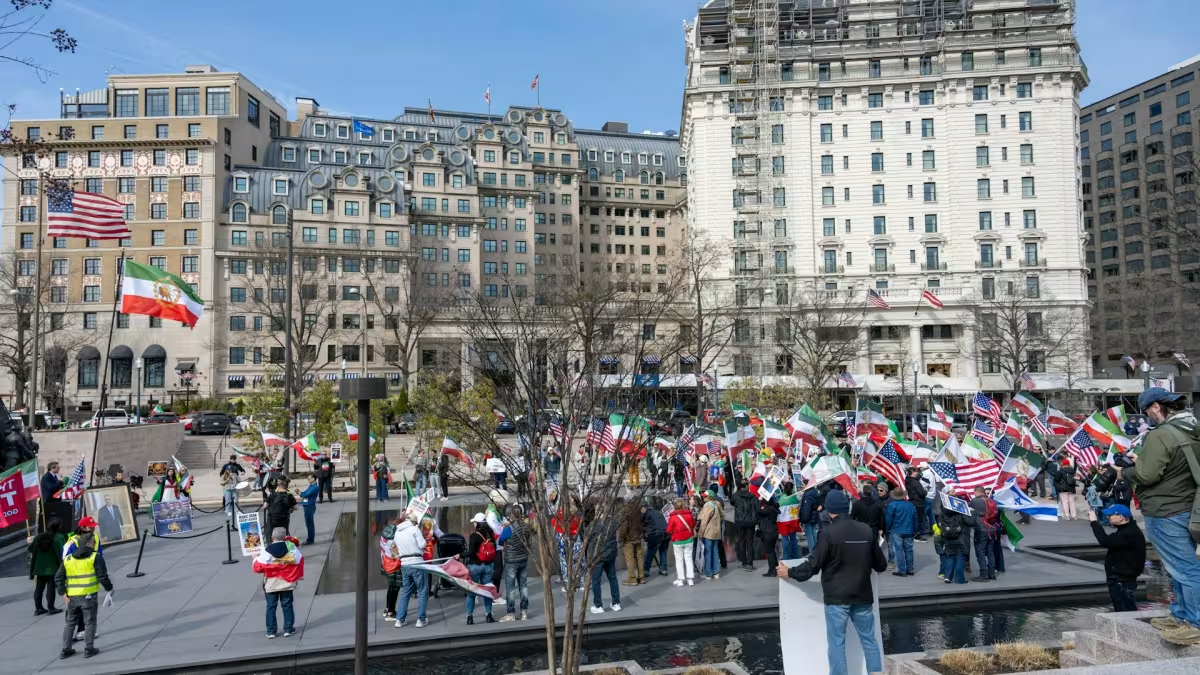
President Trump's recently negotiated agreement with Iran has fractured the Republican party, with prominent figures within GOP ranks questioning whether the administration extracted sufficient commitments from Tehran.
The pact has become an unexpected flashpoint among conservatives, who are divided over whether Trump secured meaningful concessions from Iranian officials or settled for less than the party's hardliners demanded. Some Republicans have voiced concern that the terms do not go far enough in constraining Iran's nuclear ambitions or regional influence.
The skepticism reflects deeper tensions within the party about Iran policy. Conservative hawks have long argued for an uncompromising stance toward the Iranian government, viewing any agreement with suspicion unless it includes ironclad guarantees on nuclear development and restrictions on ballistic missile programs.
Trump's willingness to negotiate stands in contrast to his first-term approach, when his administration withdrew from the 2015 nuclear deal negotiated under President Obama. That reversal had earned Trump strong support from Republican hardliners who saw the original agreement as too lenient.
The current disagreement suggests that Trump's deal-making impulses have collided with the party's ideological preferences on Iran. Some GOP members have called for transparency about the agreement's specifics, demanding to see detailed documentation of Iranian obligations before offering their backing.
The rift highlights a persistent challenge for Republican leadership: balancing the president's instinct to claim diplomatic victories against the conservative base's deep skepticism of any engagement with Tehran. As details of the agreement emerge, the party's fault lines on Iran policy show no sign of closing.
Author Sarah Mitchell: "Trump's swagger on diplomacy has always played well with voters, but his own party can't seem to decide if he's making deals or making mistakes."
Comments