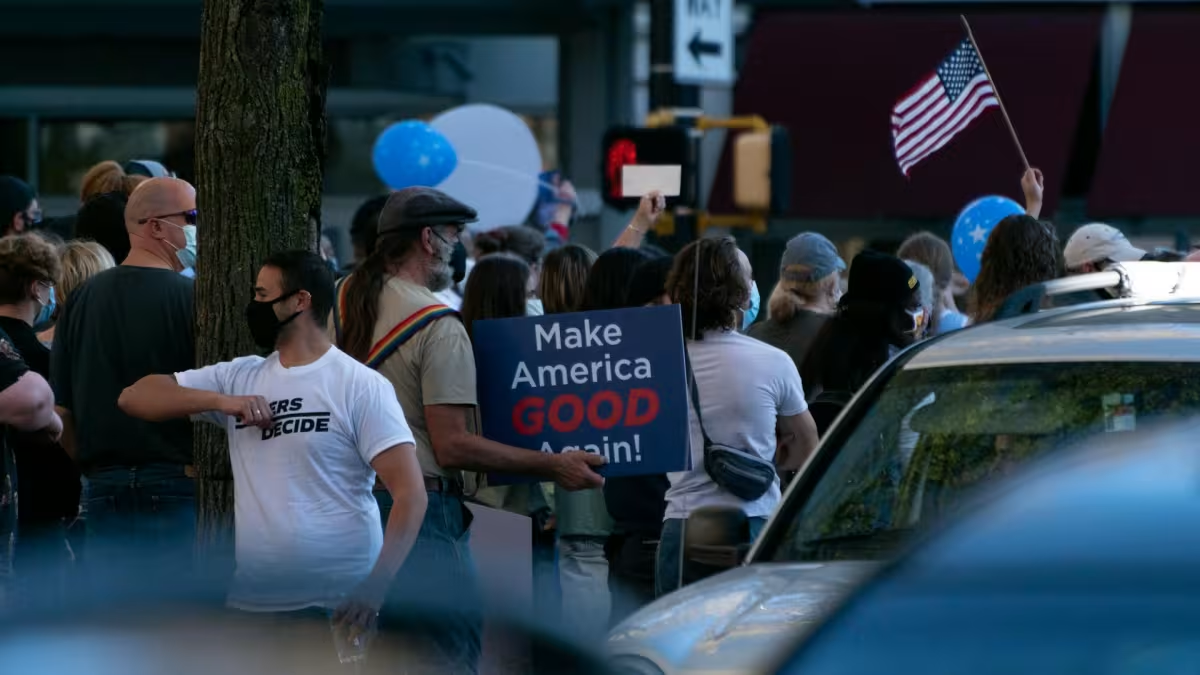
American pride has hit historic lows, driven by a political landscape fractured along deep partisan lines that show few signs of healing. The decline reflects a nation increasingly unable to find common ground on fundamental questions about identity, values, and national direction.
The erosion of national pride represents more than a polling quirk. It signals a fundamental breakdown in civic cohesion at a moment when the country faces multiple challenges requiring broad consensus. The partisan divide has become so pronounced that basic agreement on shared national interests appears out of reach for significant portions of the electorate.
The widening gulf between Republicans and Democrats extends beyond policy disagreements into questions of patriotism itself. Each side increasingly views the other not as political opponents but as threats to the nation's core identity. This dynamic poisons the well for constructive debate and makes compromise appear as surrender rather than governance.
The consequences ripple through American institutions and civic life. When citizens lose faith in the nation's trajectory, they become less invested in its institutions, less likely to engage constructively in democratic processes, and more susceptible to the narrative that the system itself is irredeemably broken. Pride gives way to cynicism, and cynicism breeds disengagement.
The partisan sorting of recent decades has intensified this trend. Geographic clustering means many Americans live, work, and socialize primarily with those who share their political worldview. Media consumption patterns reinforce these bubbles. The result is a nation of competing Americas, each convinced of its own righteousness and the other's fundamental illegitimacy.
Reversing this trajectory would require political leadership willing to appeal to something beyond partisan self-interest, but the incentives in modern politics run in the opposite direction. Primary elections reward candidates who energize the base through maximalist rhetoric. General elections often turn on narrow margins among swing voters in competitive districts. The moderate middle has hollowed out.
The decline in national pride also reflects genuine policy disagreements on matters citizens care deeply about. But when those disagreements become so total that citizens cannot even agree on basic facts or the legitimacy of their opponents' right to hold power, recovery becomes exponentially harder.
Author Sarah Mitchell: "American pride doesn't recover from a cliff like this without someone willing to risk electoral consequence by reaching across the divide, and that's increasingly rare in politics where the penalty for moderation is primary defeat."
Comments