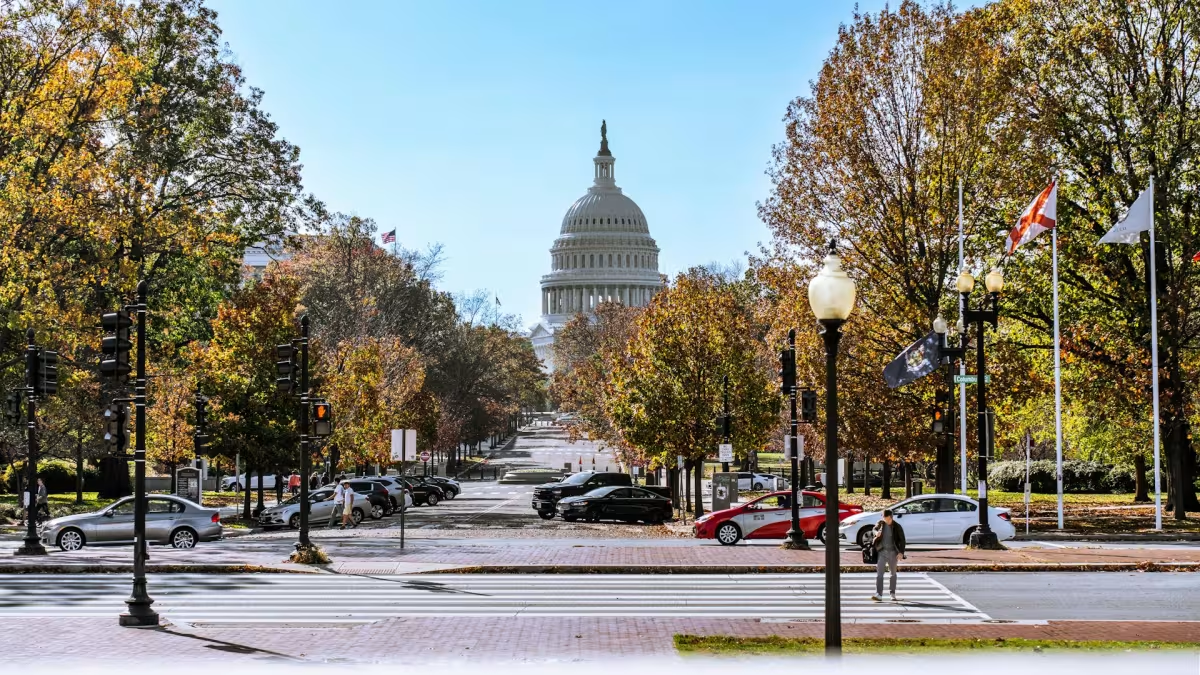
A cornerstone of U.S. foreign surveillance authority will lapse at the end of business Friday after Congress abandoned negotiations and left Washington for a scheduled recess, marking the first time the controversial program has been allowed to expire since its creation in 2008.
Section 702 of the Foreign Intelligence Surveillance Act, which permits warrantless monitoring of foreigners outside the United States by tapping into domestic communications networks, faces an uncertain future. While the underlying law expires Friday, competing theories about whether the surveillance can continue legally, combined with growing concerns about how the authority might be used under the new administration, have created a standoff with no clear resolution.
The breakdown began with conflicting strategies. The House passed a three-year extension in late April but bundled it with a Republican amendment banning Federal Reserve digital currency issuance. The Senate rejected that approach, instead passing a 45-day extension without the digital currency provision, which the House then accepted. That temporary fix set a Friday deadline for permanent action.
That deadline came and went. On Thursday, the House attempted to pass a short-term extension through July 2 but failed to secure sufficient support. House Republicans, citing no viable path forward, adjourned for their scheduled recess until June 23. Senate Republicans made two failed attempts to pass their own short-term extension, but the effort was pointless since the House had already left. The Senate followed suit shortly after.
The immediate trigger for the collapse was Democratic opposition to any extension while President Trump's appointee Bill Pulte serves as acting director of national intelligence. Pulte, a housing official with no intelligence background, previously led mortgage fraud investigations against high-profile Democrats, sparking fears he could weaponize the surveillance apparatus against political opponents.
Trump announced Thursday that he would nominate Jay Clayton, the U.S. attorney for the Southern District of New York, as the permanent intelligence director, but only after Congress had evacuated. While several key Democrats expressed support for Clayton, their backing did not translate into moving forward on extending Section 702. The Senate Intelligence Committee scheduled Clayton's confirmation hearing for Wednesday, which could clear him before Pulte's acting role begins two days later, but that timeline offers no immediate relief.
What happens when the law expires remains murky and contested. The Foreign Intelligence Surveillance Court issued a yearlong certification for the program that does not expire until March 2027. Legal experts, including the Brennan Center for Justice, argue this means the surveillance can continue operating under that certification even if the statute lapses.
However, the real vulnerability may lie not with the courts but with the telecom companies providing the access. Those firms could face lawsuits if they cooperate with intelligence agencies without statutory indemnification. Senate Intelligence Vice Chair Mark Warner acknowledged that while the court certification might technically authorize continued surveillance, telecommunications providers and tech giants like Google are unlikely to comply without legal protection against litigation.
"If the indemnification goes away, they won't provide this information," Warner said, characterizing the situation as "obviously a high-risk proposition."
Whether Trump could issue an executive order protecting companies from lawsuits remains unclear, and Warner expressed skepticism about relying on that approach. House Speaker Mike Johnson pushed back against such theories, insisting Congress must pass a short-term extension to resolve the impasse.
The expiration represents an unusual moment of leverage for Democrats at a time when the Republican party controls both chambers. Intelligence officials have warned that losing this surveillance tool could hamper counterterrorism and counterespionage operations, but Democrats have made clear they will not relent until concerns about the Trump administration's use of the authority are addressed.
Author Sarah Mitchell: "This is classic Washington chicken, except the stakes are national security and the endgame is completely unpredictable."
Comments