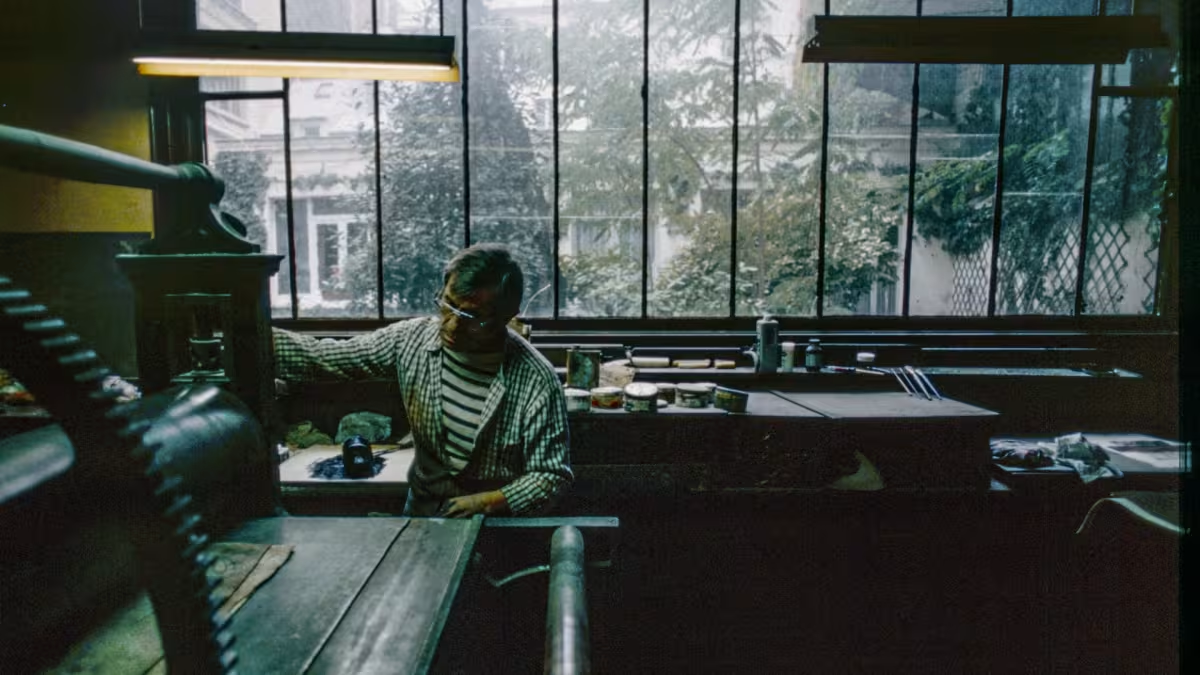
When Scott Pelley was fired from 60 Minutes this week, it landed as a gut punch to anyone who understood what that broadcast once meant. But for Sarah Safer, the impact cuts deeper. Her father, Morley Safer, spent 46 years building 60 Minutes into the most trusted program in American journalism. He paid for that devotion in ways his family felt acutely.
Safer was eight months old when her father joined the program. She has early memories of trying to speak to him through the television on Sunday nights while he was away on assignment for weeks at a time. The other children of 60 Minutes producers, crew, and fixers made the same sacrifices. Their families, she believes, are feeling similar grief now.
The current regime at CBS News represents everything Morley Safer spent his career opposing. In letters discovered after his death in 2016, he leveled withering criticism at CBS leadership. In 1990, he wrote to then-owner Larry Tisch after massive budget cuts gutted the news division: "You have ruined this company." Fifteen years later, he warned the CEO that proposed changes to the newsroom "suggest some form of designer-news, or happy-talk that would by its very nature drive out the kind of information the country needs."
The pattern of pushback was consistent throughout his career. When his father questioned CBS management decisions, he would shrug and ask, "What are they going to do? Fire me?" This week provided the answer under new leadership: yes, they will.
Morley Safer built his reputation as a war correspondent, and his most famous story illustrates exactly why institutions like 60 Minutes once mattered. In 1965, he reported on Marines burning Cam Ne, a Vietnamese village. The footage of a Zippo lighter igniting a thatched roof while elderly villagers pleaded for mercy became an iconic image of American excess in Vietnam and helped shift public opinion about the war itself. When the piece aired, President Lyndon Johnson accused CBS of "shitting on the American flag" and falsely claimed to have evidence of Safer's communist ties, pressuring CBS to fire him. The network's then-leader, Frank Stanton, refused to back down.
Safer's daughter is clear about what would happen if that story aired today. "Under our current leadership, both in Washington and at CBS, it's not hard to imagine that if this happened today, my father's green card would be revoked and his career at CBS would be finished. That is, if the story even made it on air," she wrote.
Her father was famous for flouting CBS smoking rules, lighting cigarettes in edit rooms and other places they had no business being. Sarah Safer imagines him still there, haunting the halls of CBS News, "encouraging those who carry on his legacy and, let's hope, making trouble for the brass." She expects he would be calling out the current leadership with his characteristic bluntness, comparing them to Soviet apparatchiks taking orders from above.
The decimation of 60 Minutes represents a broader assault on the first amendment that has sickened millions of viewers and colleagues. Scott Pelley's own words about the broadcast capture what has been lost: "The most trusted and esteemed program in American journalism" has been murdered.
Author James Rodriguez: "The irony is brutal: CBS News had the spine to stand up to a sitting president in 1965, but can't seem to stand up to anyone today."
Comments