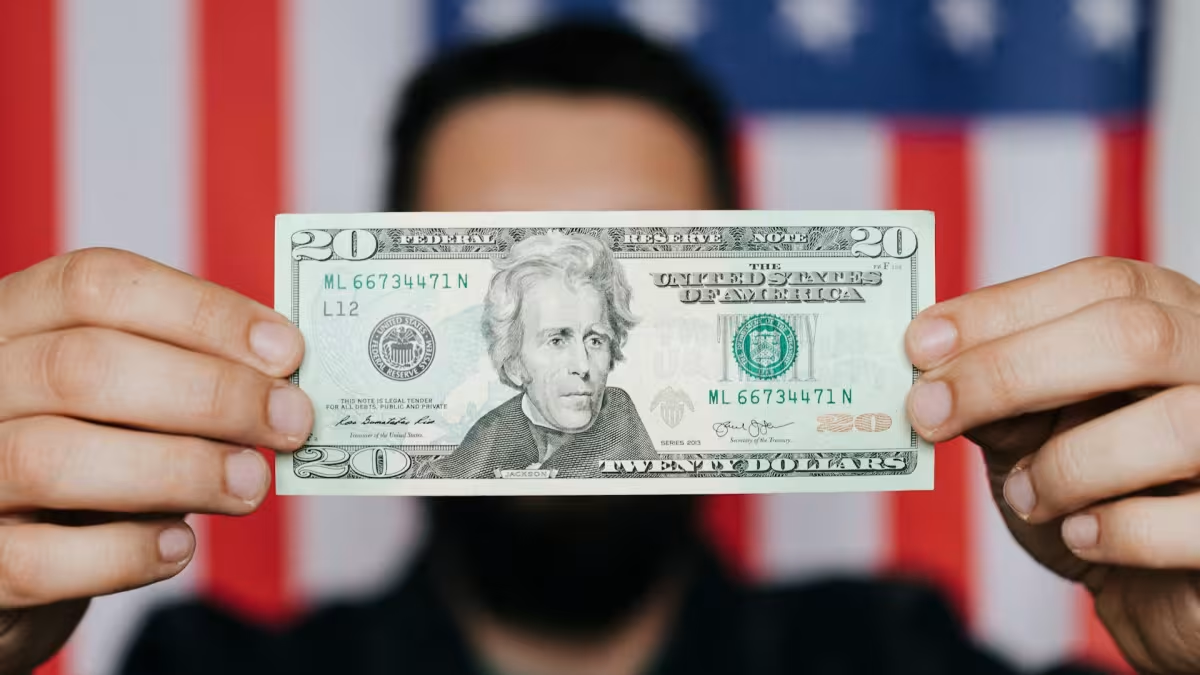
Kevin Hassett, Donald Trump's chief economic adviser, appeared on Fox News over the weekend with an unusual pitch: Americans should feel good about paying more for everything.
Speaking to the network's audience, Hassett defended soaring costs on groceries, gas, electricity and housing as a sign of economic health. He acknowledged increased stress on credit cards but reframed it as optimism. "One of the reasons is that people are spending more money on gas, but they're also spending more on everything else. Not just groceries, but restaurants, and so on," Hassett said. "I think that's a sign you would see when people are optimistic about the future."
The pitch came as consumer sentiment hit a 73-year low. The University of Michigan's consumer sentiment index dropped to its lowest point since the survey began in 1952. Rather than accept that metric as evidence of genuine economic strain, Hassett dismissed it outright. "The Michigan survey no longer has anything to do with the economy. It's just a place where Democrats get to register how angry they are at President Trump."
The argument strains credibility on its face. Hassett's framing asks Americans to ignore their actual spending patterns and trust an economist's assurance that wallet pain signals prosperity. His dismissal of a decades-old survey as merely partisan noise rather than a reliable barometer of household anxiety reflects the tension between official messaging and lived experience.
Hassett is not alone in offering rosy interpretations of deteriorating circumstances. Secretary of State Marco Rubio suggested the United States occupies a "very fortunate" position even as fuel prices soared, implying Americans should count their blessings rather than assess their bank accounts. Trump himself has shown little patience for economic concerns, saying last month that he doesn't think about Americans' financial situations when weighing major policy decisions.
The gap between what officials say is happening and what consumers experience at checkout stands grows wider each time a senior adviser insists that higher costs represent grounds for celebration. Whether voters ultimately accept or reject that framing remains an open question, but the disconnect itself speaks to how the administration chooses to engage with economic anxiety rather than address it.
Author James Rodriguez: "Telling people that financial stress means they should be more confident is a strategy that works only if nobody checks their grocery receipts."
Comments