Within a span of two weeks this May, the strategic landscape of the Indo-Pacific has crystallized into a picture of rising military activity, weapons deals, and high-stakes diplomacy. The U.S. and its allies are signaling resolve while Beijing grows increasingly vocal about what it sees as regional provocation.
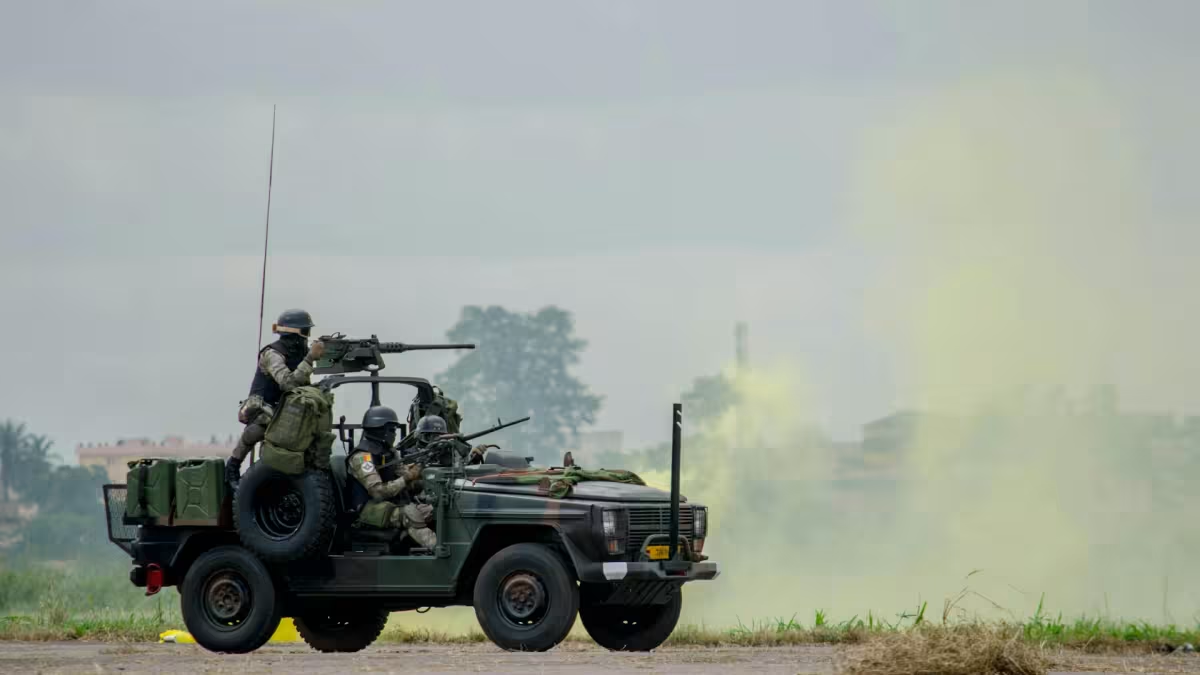
The Philippines hosted joint drills between American and Japanese forces that included firing a Tomahawk missile from a Typhon launcher, along with ship-sinking Type 88 missiles. It was the first time such weaponry had been deployed in that configuration in the region. China's foreign ministry characterized the activity as a threat, calling Japan's rearmament a "gray rhino charging towards peace and order."
Japan moved quickly to deepen military ties elsewhere, signing a defense cooperation agreement with Indonesia while simultaneously easing its own arms-export restrictions. The timing suggested a coordinated shift toward broader regional partnerships. Meanwhile, Taiwan's legislature approved $25 billion in special defense funding for weapons purchases, breaking months of political gridlock and signaling determination to bolster its military capacity despite international pressure.
Against this backdrop of military positioning, President Trump headed to China for talks with President Xi Jinping. The visit brings together two leaders at a moment when American policy in the Pacific appears to be shifting. The Trump administration has indicated it may redirect focus away from the Indo-Pacific toward the Western Hemisphere and Middle East, while also distancing itself from traditional regional allies.
Christine Wormuth, president of the Nuclear Threat Initiative and former U.S. Army secretary, underscored the stakes of the Trump-Xi meeting. "The Washington-Beijing relationship is likely the most important relationship on the globe," she said, pointing to implications for nuclear security, biotechnology, and trade. Analysts expect Taiwan to dominate private discussions, with negotiators dissecting every nuance of public statements and watching for any shift in American positioning.
The delegation accompanying Trump underscores an economic focus. Nvidia CEO Jensen Huang, Boeing's Kelly Ortberg, and GE Aerospace's Larry Culp joined the president abroad, suggesting deliberate outreach to the business sector. Grant Rumley, a former Pentagon official, described Trump's approach as seeking "some kind of economic detente with China." He noted that competition between the two powers has evolved from a direct confrontation into a longer endurance test, particularly around critical minerals and supply chain dependencies.
The window for these talks comes at a critical juncture. Taiwan's weapons funding, military cooperation agreements in the region, and increased U.S.-Japan operational tempo all represent responses to China's expanding military capabilities. Yet Trump's distance from longstanding alliances and his stated interest in negotiations suggest a potential recalibration of American strategy, one that may prioritize economic engagement over military containment.
Author James Rodriguez: "The next few days in Beijing will tell us whether Trump is genuinely interested in de-escalation or simply buying time while Washington repositions globally."
Comments