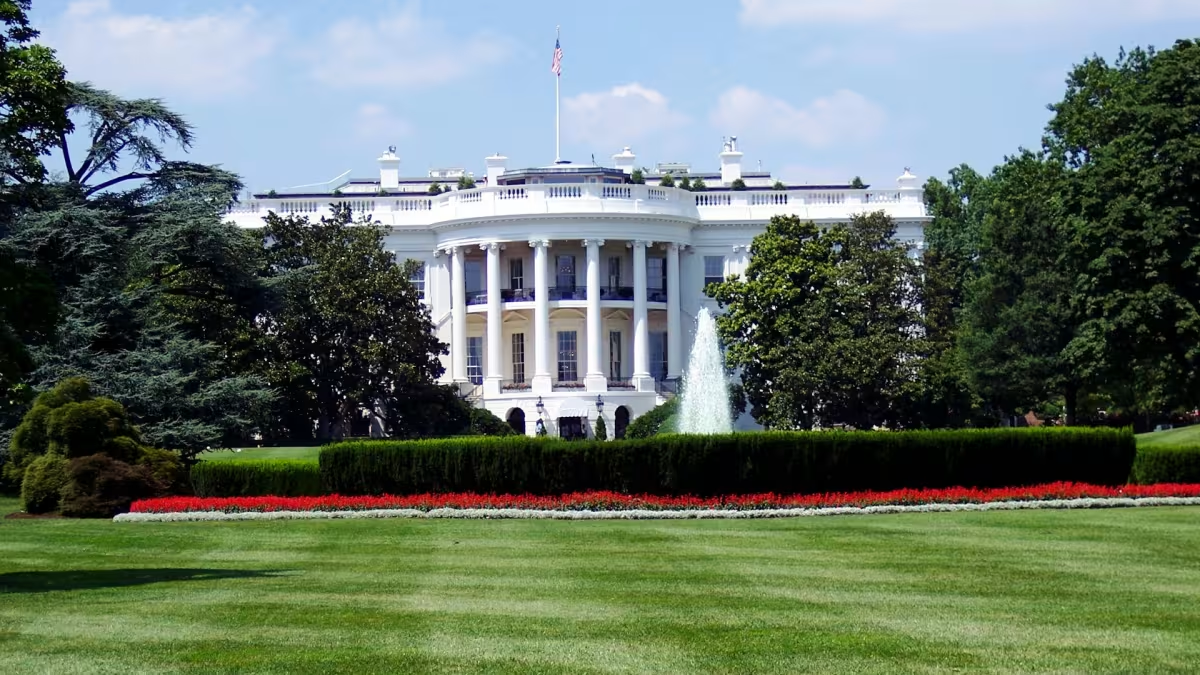
Republicans just handed Democrats a gift wrapped in marble and gilt. Buried inside their $72 billion immigration bill sits a $1 billion line item for security upgrades tied to President Donald Trump's East Wing renovation project, a sprawling 90,000-square-foot ballroom that has become the unexpected flashpoint in this year's budget fight.
The official language sanitizes it. The legislation refers to an "East Wing Modernization Project," scrubbing away any mention of the ballroom itself. But everyone on Capitol Hill knows what it really is, and Democrats are preparing to make that cost impossible to ignore.
Senate Minority Leader Chuck Schumer sent a letter to Democratic colleagues labeling Republicans "Ballroom Republicans" who are asking working families to foot the bill while Trump reaps the perks. He promised aggressive parliamentary tactics, including Byrd rule challenges designed to strip out the non-budgetary language and force the GOP into a series of votes on amendments that would restore healthcare funding and address other Democratic priorities.
The political calculus is straightforward. Democrats have polling showing that 56% of Americans oppose tearing down the East Wing for the ballroom, compared to just 28% in favor. That unfavorable landscape existed before voters even learned they might be paying for it.
What complicates life for Senate Majority Leader John Thune and his Republicans is that several members of his own caucus have already broken ranks. Senator Rick Scott of Florida told NBC News weeks ago that he sees no reason to use taxpayer money for the project and called for private funding instead. Senators Josh Hawley of Missouri and Rand Paul of Kentucky have expressed similar skepticism. Those positions could become very uncomfortable if Democrats force floor votes stripping out the ballroom provision.
Two other Republicans drawing close attention are Senators Susan Collins of Maine and Dan Sullivan of Alaska, the most vulnerable Republicans heading into the 2026 elections. Both voted with Democrats on numerous cost-related amendments to the budget measure that set this whole process in motion. Their votes during this debate could matter considerably.
Trump himself created the opening that Democrats are now driving through. He had initially promised that the ballroom would be funded entirely through private sources, with no tax dollars involved. That pledge evaporated the moment the bill landed with the $1 billion security provision attached. The president has offered no public explanation for the reversal.
On the Senate floor, Thune avoided mention of the ballroom entirely, instead framing the bill as a law-and-order measure that provides essential resources for immigration enforcement. He attacked Democrats for opposing ICE and Border Patrol funding, invoking National Police Week to underscore his message.
The debate over the ballroom reflects a broader tension within Republican ranks about Trump's priorities and how far lawmakers will go to fund them. Democrats sense weakness and are positioning to exploit it, turning an architectural project into a test of Republican unity and fiscal discipline.
Author Sarah Mitchell: "Trump handed his opponents exactly what they needed to paint his party as captured by his personal interests, and the GOP's internal divisions on this issue suggest some Republicans realize the trap is real."
Comments