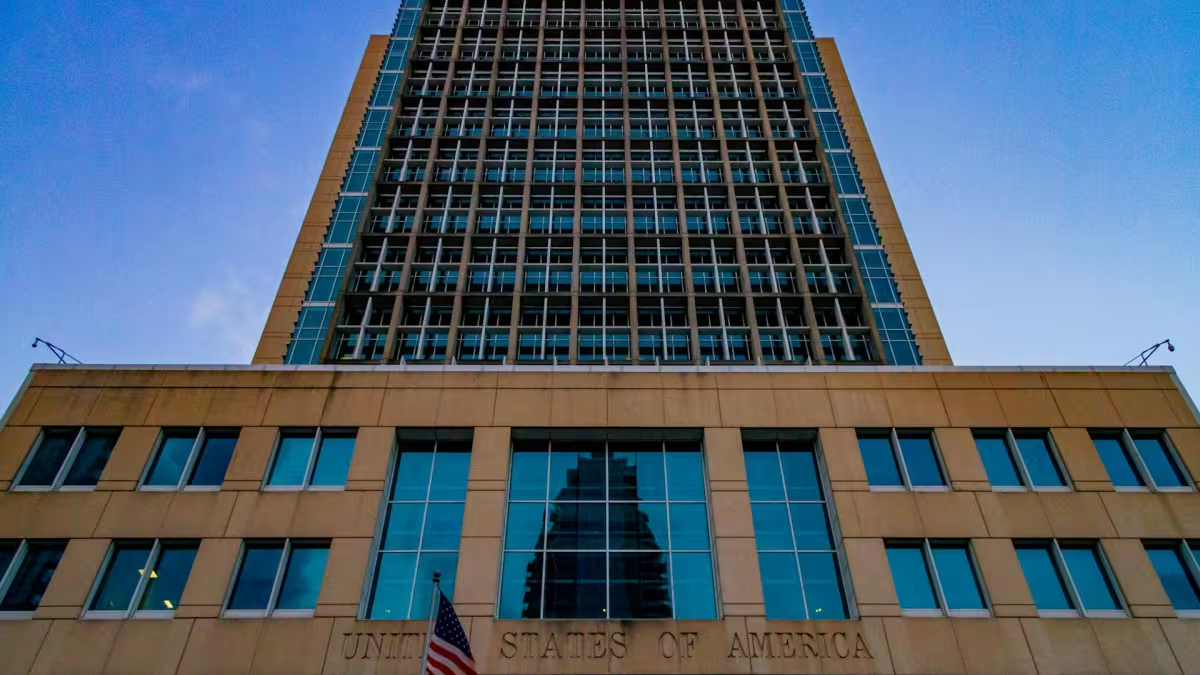
The Department of Defense announced Friday that it has forged partnerships with seven major artificial intelligence companies, positioning the U.S. military to operate as a technology-enabled fighting force with unprecedented computational power backing combat decisions.
The agreements involve SpaceX, OpenAI, Google, Nvidia, Reflection, Microsoft, and Amazon Web Services. The Pentagon said the deals will accelerate the shift toward an AI-first military posture and enhance warfighters' ability to maintain what it calls "decision superiority" across all combat domains.
The partnerships integrate these firms into the Pentagon's classified and unclassified network systems, designed to speed data processing, sharpen situational awareness, and improve command decisions in complex battle scenarios. The Defense Department is budgeting tens of billions of dollars across numerous technology contracts focused on intelligence operations, drone systems, and secure information networks.
Defense Secretary Pete Hegseth outlined the broader strategy in January, calling for an "AI acceleration strategy" aimed at removing regulatory obstacles and channeling investment to ensure American military dominance in this technology space. He emphasized the need to eliminate what he termed "bureaucratic barriers" to experimentation and deployment.
The moves have drawn scrutiny from lawmakers and privacy advocates. Questions have surfaced regarding public spending oversight, the global cyber security implications of integrating commercial AI into military infrastructure, and concerns that such systems could be repurposed for domestic surveillance applications.
The disputes extend to companies themselves. Anthropic, another prominent AI firm, has clashed with the Pentagon over restrictions on how the military could use its tools. That disagreement led the Defense Department to designate Anthropic a supply-chain risk last month, effectively blocking its use by the Pentagon and its contractors.
Author James Rodriguez: "This is the Pentagon betting the farm on commercial AI partnerships without resolving basic questions about oversight, security, or what happens when these tools malfunction in the field."
Comments