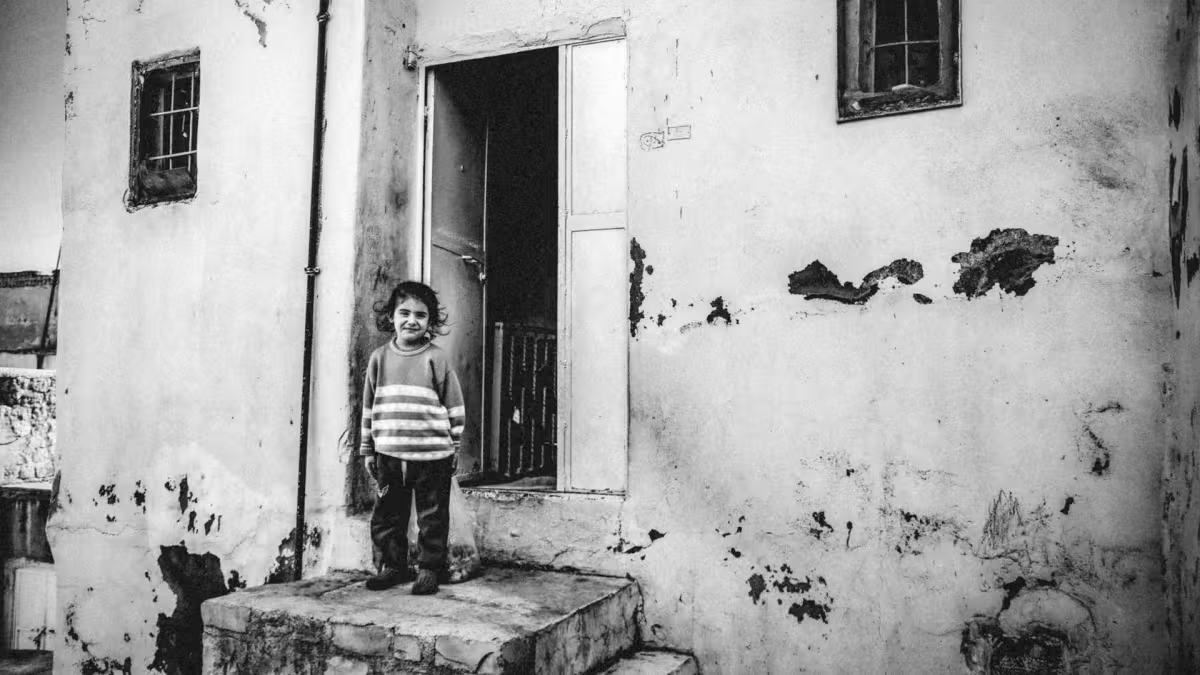
Manpreet turned 11 inside a locked facility in Texas, surrounded by strangers in a cafeteria that served as a makeshift party venue. Her parents scraped together snacks from the commissary to build something resembling a cake. No candles. When asked what she would have wished for if there had been, the answer was simple: freedom for her family.
She and her brother Guri, 12, along with their parents Jagdish and Gurwinder, have been detained at the Dilley immigration processing center since February. Their arrest came without warning during what they thought was a routine check-in appointment at an immigration office. "In that moment, it was like my life force was sucked out of me," Gurwinder said.
The family fled Punjab, India, after Jagdish converted from Sikhism to Catholicism and faced persistent threats and violence in his community. They arrived in the United States in 2022 seeking asylum and settled near Los Angeles. When government officials summoned them for what they assumed would be a simple photo update, they walked into a detention order instead.
More than 5,200 parents and children are now held at Dilley after the Trump administration resumed family detentions last year. Medical professionals have warned repeatedly that even short stints in detention can harm children, while prolonged confinement causes documented physical and mental damage.
Recent months have brought mounting public pressure. Celebrity supporters including Madonna and Pedro Pascal, alongside lawmakers, have called for an end to family detention. A February measles outbreak forced quarantines. Parents have reported their children catching respiratory illnesses, gastrointestinal problems, and complications the facility appeared unprepared to treat. One nine-month-old lost 8 pounds over a single month. Another child with a severe ear infection suffered partial hearing loss after delayed care.
The psychological toll runs deeper. Children have regressed developmentally, wet beds, stopped playing outdoors after guards yelled at them, and abandoned classes because instructors discussed why they were detained. Teenagers have turned to self-harm. Guri confessed he worried he was going "crazy" inside.
Manpreet lost at least 6 pounds after a week of uncontrollable vomiting. She credits contaminated tap water and only improved after her parents could afford bottled water from the commissary. Guri has experienced bloody stools with no specialist referral. Jagdish endures leg pain from a prior car accident, receiving only over-the-counter painkillers. Gurwinder's arthritis flared to unbearable levels. The facility cannot provide her previous medications, swapping them for ibuprofen that does nothing and steroids that destabilize her diabetes.
Each morning, Manpreet helps her mother out of bed, fixes her hair, and dresses her before walking to the cafeteria. Both children have lost their appetites. At home, Manpreet loved cooking: cakes, fried rice, slushies she discovered on YouTube. Guri preferred his mother's traditional Indian meals. At Dilley, they receive mystery meats and unseasoned vegetables.
For the family's faith practices, the facility offers no accommodation. As Sikhs and Hindus required to eat vegetarian on Tuesdays and Thursdays, they often go hungry on those days. "So on those days we often go hungry," Gurwinder said.
Education has nearly stopped. Despite earning a "perfect attendance" award at her Los Angeles school, Manpreet skips classes at Dilley. The only option for her grade is taught in Spanish, which she doesn't speak. She stays near her mother instead, sleeping on a cot beside her bed when Gurwinder requires medical center stays. Guri attended morning classes until his mother's health declined so sharply he could no longer concentrate. Now he watches television with his father and sometimes plays volleyball, dreading each time a friend leaves the facility.
The Dilley center is operated by CoreCivic, a private prison company, under contract with the Department of Homeland Security. When asked about specific medical concerns, food quality, and educational access, DHS declined to respond to detailed questions. Acting DHS assistant secretary Lauren Bis stated generally that the agency provides three meals daily and access to education and healthcare, adding that no active measles cases currently exist at the facility. CoreCivic disputed "many of the claims" raised but refused to specify which ones, saying it "continually evaluates" practices to ensure appropriate care.
This pattern stretches back decades. The George W. Bush administration opened the first large-scale family detention facility. Obama opened Dilley in 2014 to immediate outrage. Lawsuits documented medical neglect and psychological torture. Trump expanded the practice during his first term. Biden ended it in 2021, only for Trump to resume it upon returning to office.
Research confirms the damage. Harvard University and Massachusetts General Hospital researchers analyzing medical records from 165 children detained between 2018 and 2020 at another facility found evidence of medical neglect and lasting mental and physical harm.
Jagdish weeps when contemplating his children's future. He fears they will blame him for forcing them to flee, that his decision to change faiths has ruined their lives. "I worry I came here to save myself, and I ended up ruining three lives," he said. Gurwinder feels equally helpless. "My kids' lives are being ruined. Their education is being messed up," she said. "But we don't know, what can we do?"
Author James Rodriguez: "An 11-year-old's birthday wish trapped behind razor wire should disgust anyone watching this unfold."
Comments