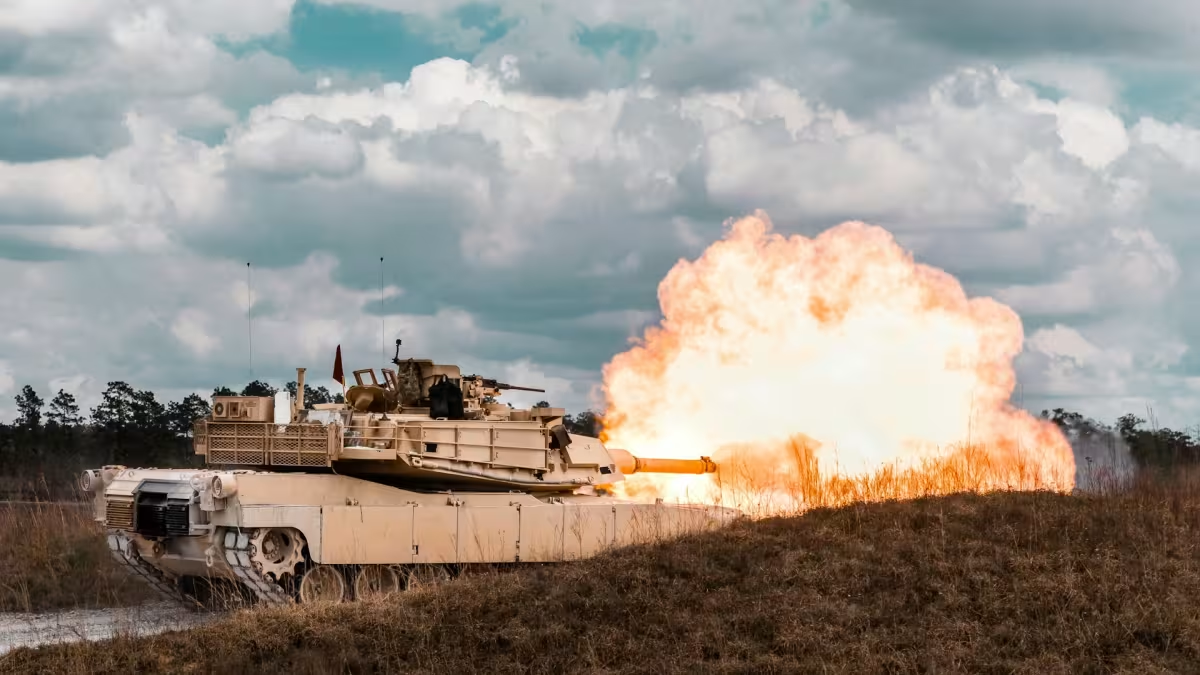
Senate Republicans defeated a Democratic resolution Wednesday to strip President Donald Trump of authority to expand military operations against Iran, handing Democrats another legislative loss on the war powers question that has increasingly divided the chamber.
The vote fell 47-52, almost entirely along party lines. Sen. Rand Paul of Kentucky stood alone among Republicans in supporting the measure, while Sen. John Fetterman of Pennsylvania broke ranks as the sole Democrat to vote no. Sen. Jim Justice of West Virginia did not vote.
The resolution, sponsored by Sen. Tammy Duckworth of Illinois, would have required Trump to pull U.S. forces from Iranian hostilities unless Congress authorized continued action through a formal declaration of war or specific military authorization. The language reflects growing Democratic anxiety that Trump could widen the conflict without meaningful congressional oversight.
Yet even as Republicans blocked the effort, fissures are widening within their ranks. Several GOP senators signaled they will demand answers and accountability once military operations cross the 60-day threshold mandated by the War Powers Resolution of 1973, a deadline arriving at the end of April.
Sen. Thom Tillis of North Carolina said he will focus squarely on that timeline. "We've got to start answering questions," he stated. "The 60-day target is what I'm looking at."
Sen. John Curtis of Utah, typically a reliable Trump ally, wrote in the Deseret News that he will not back prolonged military action without congressional approval after the 60-day window closes, citing both historical precedent and constitutional obligation. Sen. Lisa Murkowski of Alaska has raised concerns about the war and proposed an alternative that would grant Trump limited military authority instead.
Senate Minority Leader Chuck Schumer vowed relentless pressure from his side. "We will bring these resolutions to the floor every week," he told reporters Tuesday, framing the choice facing Republicans as one between supporting troops with a clear mission or allowing them to operate under chaos. He called the conflict "Trump's disastrous and failed war policies."
Economic anxiety is shaping the debate. Gas prices have climbed since the war began, and rising diesel and fertilizer costs are hitting pocketbooks nationwide. This is creating political risk for Republicans, particularly those facing tough elections in energy-sensitive states.
Sen. Josh Hawley of Missouri said he heard constantly about fuel costs while campaigning at home. "I hope we're getting closer to having this be over," he said, calling for an exit strategy that lowers energy prices and protects national security. He acknowledged the 60-day window gives Trump some maneuvering room before Congress reasserts control.
Not all Republicans are ready to rein in the president. Sen. Ron Johnson of Wisconsin suggested Trump should act without congressional approval for as long as necessary. Johnson also left the door open to a U.S. military ground presence, including special operations forces, saying he would not oppose such deployments if aimed at regime change in Iran. "Unconditional surrender, this regime has to be ended," he said.
Public opinion tilts against the war. A CBS News poll showed 60 percent of Americans disapprove of military action in Iran, while just 40 percent approve. The same survey revealed widespread distrust of Trump's handling of the situation.
Author Sarah Mitchell: "Republicans are buying time on war powers, but the 60-day clock is ticking and gas prices are their real enemy here."
Comments