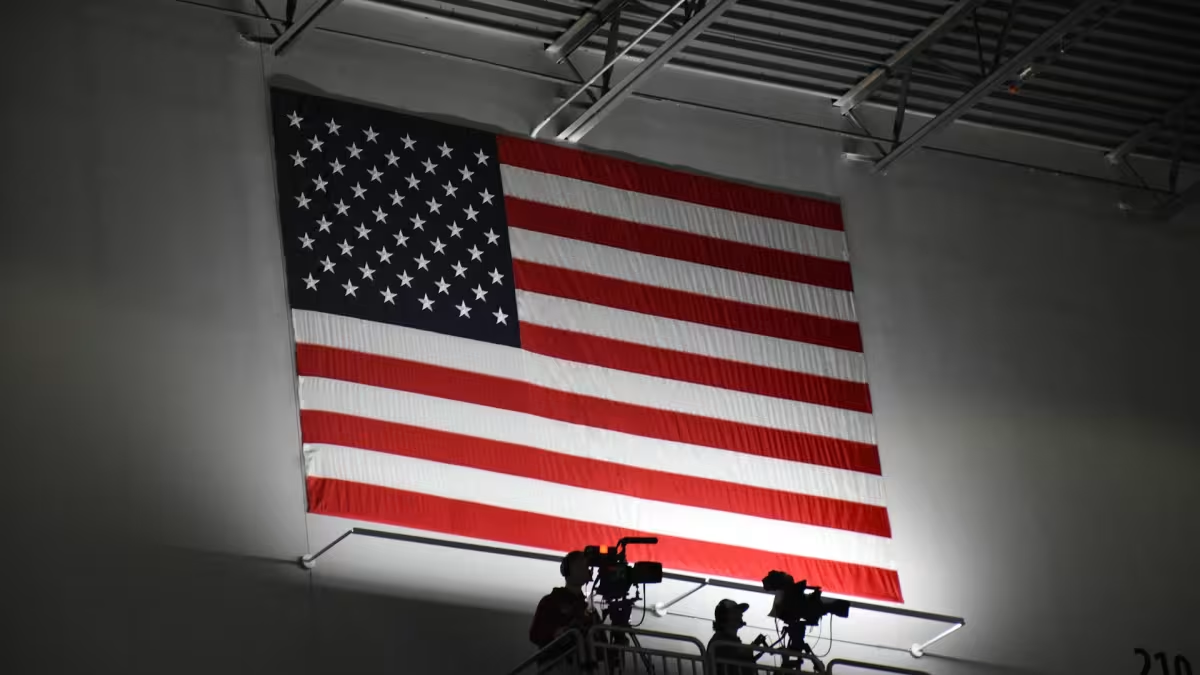
The Artemis II launch provided a striking counterpoint to the fractious state of American politics, demonstrating that the nation retains the capacity to undertake ambitious endeavors even as it grapples with profound internal divisions.
The mission's liftoff captured something essential about the contemporary moment: a country capable of extraordinary technical achievement, yet chronically stalled by partisan conflict and social fragmentation. In an era defined by political turbulence and competing tribal allegiances, the lunar program offered a rare spectacle that transcended the usual fault lines.
The launch succeeded in part because it operated outside the typical machinery of partisan contestation. Space exploration, particularly efforts to return humans to the moon, maintains broad public appeal that cuts across demographic and political boundaries. Unlike issues that animate daily news cycles and cable television debates, Artemis II activated a different set of national sentiments—pride in scientific prowess, fascination with exploration, and a collective sense of purpose.
The moment was conspicuous precisely because such instances have grown scarce. Where once Americans regularly gathered around shared achievements, contemporary public life often feels fragmented into competing narratives and opposing camps. A successful space launch cannot resolve the deeper currents of polarization flowing through American institutions and society.
Yet the mission's resonance suggested something worth noting: the nation's capacity for big accomplishments remains intact. The technological infrastructure, institutional knowledge, and human talent required to reach the moon still exists. What remains uncertain is whether that capability can be sustained or extended to address the other substantial challenges facing the country.
Comments